
editor, Author at Amazon Listing Service - Page 2 of 2

Author: editor

Amazon Product Listing Services: How Optimized Listings Can Drive +30% Conversion Growth

Amazon Product Page Strategies

Selling on Amazon offers tremendous growth opportunities for businesses of all sizes. However, the marketplace is extremely competitive. According to Statista, Amazon accounted for 37.6% of total U.S. ecommerce sales in 2023, making it the largest online retailer in the country.
For business owners, this statistic underlines a key insight. Even great products can get lost among millions of listings if they are not optimized for Amazon search and conversion.

Many new sellers believe that simply listing a product is enough to generate sales. In reality, high-performing sellers leverage structured listing strategies, keyword optimization, and data-driven presentation. This is where partnering with a professional Amazon listing service or an Amazon listing service provider can make a tangible difference.

Amazon Product Listing Services

This guide will cover proven strategies for optimizing your Amazon listings. Implementing these tactics can help your products gain visibility, attract buyers, and improve conversion rates by up to 30 percent.

1. Why Optimized Listings Matter

Optimized listings do more than increase search visibility. They also directly impact how buyers perceive your product and whether they decide to purchase. Poorly structured listings often result in:

  • Low search ranking
  • High bounce rates
  • Missed sales opportunities

professional Amazon listing service
A professional Amazon listing service ensures that every element of your listing, from title to backend keywords, is designed to attract clicks and convert visitors into buyers. For business owners, this means more sales without necessarily increasing ad spend.

2. Conduct Comprehensive Keyword Research

Keyword research is the foundation of any high-performing Amazon listing. Amazon operates primarily as a search-driven marketplace, which means your products must match buyer search intent.

Keyword Research

Key steps include:

  • Identifying high-volume search terms
  • Including long-tail keywords relevant to your product
  • Analyzing competitor listings
  • Tracking seasonal trends

An Amazon listing service provider often uses specialized tools to analyze keyword demand and competition. Proper keyword placement ensures that your listings show up for searches that actually drive conversions.

Apparel Brand Optimization

Consider an apparel brand selling a basic black hoodie. Without proper keyword research, the listing might only use a generic keyword like “black hoodie.” While this term has high search volume, it is also extremely competitive and does not capture the specific intent of many shoppers.

With comprehensive keyword research, the brand can uncover more targeted terms such as “men’s oversized black hoodie,” “women’s fleece hoodie,” “streetwear hoodie,” or “lightweight gym hoodie.” These long-tail keywords reflect how real customers search for apparel based on style, fit, and use case.

 Amazon listing service provider

When these keywords are strategically placed in the product title, bullet points, and backend search fields, the hoodie can appear in a wider range of relevant searches. For example, a shopper searching for “oversized streetwear hoodie for men” may now discover the product even if they were not specifically searching for that brand. As a result, the apparel listing attracts more qualified traffic, improves click-through rates, and increases the likelihood of conversion.

3. Craft Titles That Convert

Your product title is one of the most critical elements of your listing. Amazon’s algorithm and your buyers both use the title to assess relevance.

Effective titles usually include:

  • Primary keyword
  • Core product features
  • Variations such as size, color, or model
  • Brand name, if applicable

For instance, instead of "Wireless Headphones," a more optimized title could be:

"Wireless Bluetooth Headphones with Noise Cancellation, 30-Hour Battery Life, Black"

By working with a professional Amazon listing service, sellers ensure that titles are both search-friendly and compelling enough to encourage clicks.

4. Write Persuasive Bullet Points

Bullet points are where buyers decide if your product meets their needs. Optimized bullets focus on benefits rather than just features.

Key considerations include:

  • Addressing customer pain points
  • Highlighting unique product advantages
  • Detailing ease of use or durability
  • Including guarantees or warranties

For example, instead of “Made with stainless steel,” you could say:

"Durable stainless steel construction designed to withstand daily use without rust or corrosion."

A professional Amazon listing service helps craft persuasive copy that communicates value and builds buyer confidence.

5. Use High-Quality Product Images

Visuals are essential for driving conversions. Buyers cannot touch or feel the product, so images must clearly communicate quality and functionality.

Effective images include:

  • Clear main product image on white background
  • Lifestyle images showing real-world use
  • Close-ups of key features
  • Infographics highlighting product benefits
  • Size comparison images

Working with a professional Amazon listing service or Amazon product listing company ensures images meet Amazon standards while effectively showcasing the product.

Use Case: Electronics Brand Optimization

Consider an electronics brand selling wireless noise-canceling headphones. If the listing only includes a single product image on a white background, customers may struggle to understand the product’s features or real-world benefits.

With a well-optimized visual strategy, the brand can include multiple types of images that guide the buyer through the product’s value. For example, a lifestyle image might show a commuter wearing the headphones on a train, illustrating portability and comfort. A close-up image can highlight the control buttons and premium ear cushion materials. Infographic-style images can visually explain features such as battery life, Bluetooth range, and active noise cancellation. A comparison image may also show how compact the headphones are when folded for travel.

When these visuals clearly communicate the product’s functionality and benefits, shoppers can make faster and more confident buying decisions. As a result, the electronics brand can improve click-through rates, increase customer trust, and achieve higher conversion rates on its Amazon listing.

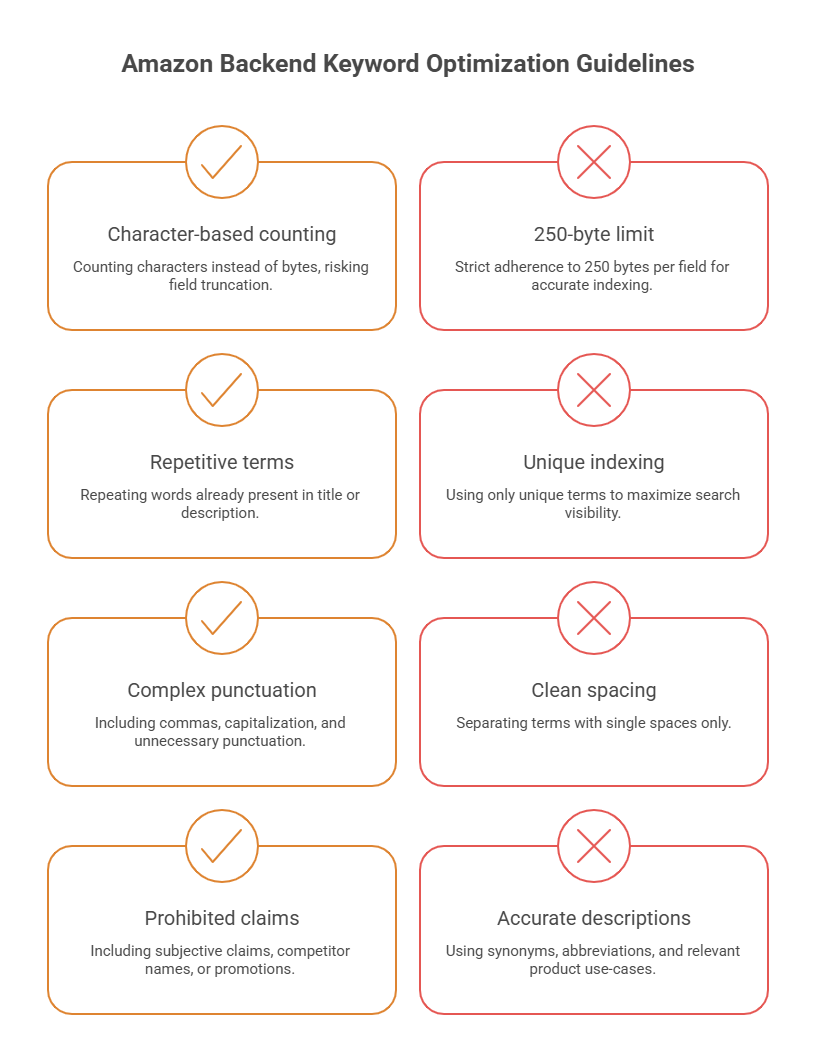
6. Optimize Backend Search Fields

Many sellers overlook backend search fields, yet they can significantly influence ranking. Backend keywords allow Amazon to index your product for terms not visible in the public listing.

Best practices:

  • Include alternate product names
  • Add common misspellings or regional terms
  • Include related phrases
  • Avoid keyword stuffing

An Amazon listing optimization agency audits these fields to improve discoverability without violating Amazon policies.

Use Case: Furniture Brand Optimization

Consider a furniture brand selling a compact wooden desk designed for small spaces. The public listing may focus on primary keywords such as “small wooden desk,” “home office desk,” or “compact writing desk.” However, many shoppers might search using different variations that cannot all fit naturally in the visible listing.

By optimizing backend search fields, the brand can include additional relevant terms such as “apartment desk,” “study table,” “small workstation,” “dorm desk,” or “wood computer desk.” These variations help Amazon understand that the product is relevant to multiple types of searches related to small-space furniture.

For example, a student searching for “dorm room desk” or a remote worker looking for a “small apartment workstation” may now find the product even if those exact phrases do not appear in the main listing. This broader keyword coverage increases the chances of appearing in more search results, helping the furniture brand attract additional qualified traffic and improve overall sales performance.

7. Leverage Enhanced Brand Content

A Plus or Enhanced Brand Content allows sellers to tell a more compelling story about their brand and products. Benefits include:

  • Detailed feature explanations
  • Comparison charts
  • Lifestyle imagery and infographics

Brands using Enhanced Content often see higher engagement and improved conversion rates. An Amazon listing optimization services provider can design layouts that combine storytelling and visual design to highlight product value.

Use Case: Real Estate Brand Optimization

Consider a real estate brand selling smart home devices designed specifically for property owners and real estate professionals, such as smart locks or home security cameras. A standard product description may only list basic specifications like battery life, installation method, or connectivity features.

With Enhanced Brand Content, the brand can create a more compelling presentation that connects the product to real estate use cases. For example, a lifestyle image could show a property manager remotely unlocking a rental unit for a viewing. An infographic might explain how the smart lock improves property access management for landlords or short-term rental hosts. A comparison chart could highlight differences between models designed for apartments, rental homes, or office spaces.

By presenting the product within a real-world property management context, the listing becomes more relevant to real estate professionals and homeowners. This approach helps shoppers quickly understand how the product solves their problems, which increases trust, improves engagement, and ultimately drives higher conversion rates.

8. Monitor Performance and Adjust Continuously

Amazon listings are never static. Successful sellers regularly monitor metrics such as:

  • Click-through rates
  • Conversion rates
  • Keyword rankings
  • Customer feedback
  • Advertising performance

A reliable Amazon VA agency can manage ongoing optimization, freeing business owners to focus on growth strategies. Continuous improvements help listings stay competitive as market trends evolve.

Conclusion

Optimized Amazon listings are essential for driving traffic and improving conversion rates. From keyword research to persuasive copy, high-quality images, and ongoing performance monitoring, every element plays a role in turning browsers into buyers.

For business owners, leveraging an Amazon product listing service, professional Amazon listing service, or Amazon listing service provider can save time while ensuring listings are optimized for maximum performance. By applying these strategies, sellers can achieve measurable results, including up to 30 percent higher conversions.

With the right approach, Amazon listings become more than a product page, they become a strategic sales tool.

FAQs

1. What are amazon listing services?

Amazon listing services help businesses create, optimize, and manage product listings to improve visibility, engagement, and sales.

2. Do I need an amazon product listing company?

Working with a professional company ensures listings are optimized for keywords, images, and conversions, which can improve sales performance.

3. What does an amazon listing service provider do?

They handle listing creation, keyword research, product optimization, backend search terms, and sometimes enhanced content development.

4. How much does a professional amazon listing service cost?

Pricing varies based on the number of listings and level of optimization, but services often provide a return through increased sales and visibility.

5. Can optimized listings really improve conversion rates?

Yes. Optimized titles, images, bullet points, and backend keywords help listings appear in more searches and convert visitors into buyers.

Top 7 Amazon Marketplace Management Solutions for Jewelry Brands to Stand Out

Amazon Marketplace

Amazon remains the most powerful ecommerce platform in the world. According to DemandSage, Amazon controls approximately 37.6 percent of the US ecommerce market, far exceeding any other online retailer.

For jewelry brands, this data highlights one truth. Your customers are already on Amazon. The challenge is not access. The challenge is visibility, trust, and differentiation in a crowded marketplace.

This is where amazon marketplace management becomes essential. Jewelry brands that rely on DIY tactics often struggle to compete against sellers using data-driven systems, optimized listings, and structured account oversight. The right solutions turn Amazon from a chaotic channel into a predictable revenue engine.

Table of Contents

Why Jewelry Brands Struggle on Amazon

Top 7 Amazon Marketplace Management Solutions

How These Solutions Work Together

Final Thoughts for Business Owners

FAQ

amazon marketplace management

Why Jewelry Brands Struggle on Amazon

Jewelry is not a commodity product. Buyers care deeply about presentation, credibility, and emotional value. On Amazon, brands face several obstacles:

  • Thousands of similar listings competing for the same keywords
  • Price undercutting that erodes perceived value
  • Poor listing structure that limits discoverability
  • Weak review profiles that reduce buyer confidence

Without expert amazon marketplace services, even high-quality jewelry brands can remain invisible.

Top 7 Amazon Marketplace Management Solutions

1. Strategic Account Setup and Positioning

A strong foundation matters. Proper amazon account management ensures your brand is structured correctly from day one.

Key benefits include:

  • Accurate category and subcategory placement
  • Correct variation and parent-child setup
  • Compliance with Amazon jewelry policies

This prevents future suppression issues and improves organic visibility within the amazon business marketplace.

2. High-Conversion Product Listing Optimization

Listings are your storefront. amazon marketplace management services focus heavily on conversion optimization.

This includes:

  • Keyword-rich titles and bullet points aligned with search intent
  • Clear feature explanations that reduce buyer hesitation
  • Structured descriptions that reinforce craftsmanship and quality

Well-optimized listings improve both ranking and conversion rates.

3. Advanced Keyword and Search Term Strategy

Jewelry shoppers search differently. Successful marketplace management services analyze buying intent, not just volume.

Execution includes:

  • Long-tail keyword targeting for niche designs
  • Seasonal keyword planning for gifting periods
  • Continuous keyword refinement based on performance data

This ensures your listings remain competitive as trends change.

4. Visual Content and Brand Storytelling

Images sell jewelry. Professional amazon marketplace management includes visual optimization.

Key elements:

  • High-resolution product photography
  • Lifestyle imagery that creates emotional connection
  • A+ Content that tells your brand story

This increases dwell time and builds buyer trust without overt selling.

5. Advertising and Sponsored Campaign Management

Paid visibility is unavoidable. professional account management services manage ad spend efficiently.

Services include:

  • Sponsored Product and Sponsored Brand campaigns
  • Bid optimization to reduce wasted spend
  • Performance tracking tied to actual sales results

Advertising supports organic growth rather than replacing it.

6. Review Generation and Reputation Management

Trust drives jewelry sales. Strong amazon marketplace services focus on reputation health.

This includes:

  • Ethical review request systems
  • Monitoring and addressing negative feedback
  • Customer sentiment analysis to refine listings

Higher review volume and quality directly impact ranking and conversion.

7. Data Analytics and Performance Reporting

Growth requires clarity. amazon marketplace management services provide actionable insights.

Reporting typically covers:

  • Sales trends and SKU-level performance
  • Conversion and traffic diagnostics
  • Competitive benchmarking

This allows business owners to make informed decisions instead of guessing.

How These Solutions Work Together

Each solution supports the others. Optimized listings convert traffic. Advertising drives visibility. Reviews build trust. Analytics guide strategy. Together, they form a scalable system that supports long-term brand growth on the amazon business marketplace.

For jewelry brands, this integrated approach protects margins while expanding reach.

Final Thoughts for Business Owners

Amazon rewards brands that treat it as a serious sales channel. Jewelry businesses that invest in structured amazon marketplace management gain a competitive edge through consistency, data, and professional execution.

Rather than juggling listing updates, ads, and compliance issues, business owners can focus on product development and brand expansion while their Amazon presence runs efficiently in the background.

FAQ

1. What does amazon marketplace management include?

It includes account setup, listing optimization, advertising, review management, analytics, and ongoing performance improvement.

2. Is amazon marketplace management worth it for small jewelry brands?

Yes. Even small brands benefit from better visibility, fewer errors, and higher conversion rates when managed professionally.

3. How is amazon account management different from advertising only?

Advertising focuses on paid traffic, while amazon account management covers the entire ecosystem including listings, reviews, inventory, and compliance.

4. Can marketplace management services help with brand protection?

Yes. Many marketplace management services include brand registry support and counterfeit monitoring.

5. How quickly can results be seen?

Ads and listing improvements may show results within weeks, while long-term growth typically stabilizes over several months.

Top 7 Amazon Outsourcing Customer Service Hacks to Style a Flawless Buyer Experience

Amazon Customer Service

Customer service failures create real financial consequences for businesses.

According to data from the U.S. government’s consumer complaint portal, unresolved customer service issues are one of the most common reasons consumers file formal complaints against businesses operating online. This highlights how poor service directly increases reputational and operational risk.

For Amazon sellers, customer service performance affects seller metrics, buyer trust, and long term account stability. Missed messages, unclear responses, or slow resolutions can lead to negative feedback, A to Z claims, and listing suppression.

This is why Amazon outsourcing customer service is no longer about saving time alone. It is about protecting the business.

Table of Contents

Hack 1: Outsource First Response Time Without Losing Brand Voice

Hack 2: Use Customer Interaction Services for Repetitive Issues

Hack 3: Scale Amazon Chat Online Customer Service During Peak Seasons

Hack 4: Protect Seller Metrics Through Structured Escalation

Hack 5: Turn Customer Support Into a Revenue Protection Tool

Hack 6: Align Amazon Business Customer Service With Operations

Hack 7: Use Support Insights to Improve Listings and Policies

Final Thoughts

Frequently Asked Questions

amazon outsourcing customer service

Hack 1: Outsource First Response Time Without Losing Brand Voice

Amazon expects fast responses, but speed without consistency damages trust.

Outsourcing first responses allows sellers to stay compliant without being available around the clock.

How to execute it properly:

  • Create clear brand tone and language guidelines
  • Approve response templates that sound natural, not robotic
  • Train agents on Amazon rules and what they can and cannot promise

This approach strengthens Amazon customer service support while keeping communication aligned with your brand identity.

Hack 2: Use Customer Interaction Services for Repetitive Issues

A large percentage of Amazon messages are repetitive and predictable.

Professional customer interaction services are ideal for handling:

  • Shipping status and delivery questions
  • Return and refund explanations
  • Basic product usage inquiries

By outsourcing repetitive tasks, business owners reduce response delays and free internal teams to focus on growth activities.

Hack 3: Scale Amazon Chat Online Customer Service During Peak Seasons

Sales spikes bring message overload.

Outsourced teams allow sellers to scale amazon chat online customer service during:

  • Prime Day
  • Holiday sales
  • Promotional campaigns

Key benefits include:

  • Fast scaling without long hiring processes
  • Coverage across time zones
  • Consistent response quality under pressure

This ensures reliable amazon chat online support when buyer expectations are highest.

Hack 4: Protect Seller Metrics Through Structured Escalation

Not all customer issues are equal in risk.

Effective outsourcing includes a clear escalation framework:

  • Categorize issues by urgency and impact
  • Escalate A to Z claims and negative feedback immediately
  • Maintain documentation that aligns with Seller Central requirements

This protects response metrics, seller ratings, and account health.

Hack 5: Turn Customer Support Into a Revenue Protection Tool

Customer service directly affects profitability.

Well trained outsourced agents help:

  • Reduce unnecessary refunds through clear explanations
  • Identify repeat abuse or policy misuse
  • Resolve dissatisfaction before feedback is posted

Strong amazon business customer service minimizes revenue loss while maintaining buyer confidence.

Hack 6: Align Amazon Business Customer Service With Operations

Disconnected support creates confusion and mistrust.

Outsourced teams should be aligned with:

  • Inventory availability and fulfillment timelines
  • Product variations and bundles
  • Policy updates and listing changes

Alignment ensures accurate answers and avoids contradictory messaging.

Hack 7: Use Support Insights to Improve Listings and Policies

Support conversations reveal buyer friction faster than analytics tools.

Outsourced support data can highlight:

  • Common product misunderstandings
  • Listing clarity issues
  • Policy gaps causing repeated complaints

These insights help sellers refine listings, improve policies, and increase conversion rates.

Final Thoughts

Customer service is not a background task on Amazon. It is a performance lever.

A strategic Amazon outsourcing customer service approach allows business owners to scale operations, protect seller metrics, and deliver consistent buyer experiences without internal burnout.

When customer service runs smoothly, buyers rarely notice. When it fails, it leaves lasting damage.

Frequently Asked Questions

1. Is Amazon outsourcing customer service allowed?

Yes. Amazon allows third party customer support as long as all responses follow Amazon policies.

2. Will outsourcing affect my brand reputation?

Not when agents follow approved tone guidelines and escalation rules.

3. Can outsourced teams handle amazon chat online support?

Yes. Many teams specialize in Seller Central messaging and live chat support.

4. Is outsourcing only suitable for large Amazon sellers?

No. Small and mid sized sellers benefit by saving time and protecting metrics early.

5. Can outsourced support help prevent negative feedback?

Yes. Fast responses and proper resolution reduce unresolved issues that lead to complaints.

Top 12 Amazon Product Page Strategies for Furniture Sellers

Amazon Product Page Strategies

Online furniture sales continue to rise year over year. According to the US Census Bureau, furniture and home furnishing eCommerce sales exceeded 95 billion dollars annually, reflecting a major shift in how buyers research and purchase large household items.

For furniture sellers, this growth represents opportunity and pressure. Buyers cannot touch or test furniture online, which means the Amazon product page must do all the heavy lifting. A well structured page builds trust, answers objections, and encourages confident purchasing decisions.

Table of Contents

Why Furniture Sellers Must Get the Amazon Product Page Right

Strategy 1 Build Keyword Focused Product Titles

Strategy 2 Use Professional Furniture Photography

Strategy 3 Show Scale and Room Placement

Strategy 4 Write Bullet Points That Answer Buyer Questions

Strategy 5 Create Detailed Product Descriptions

Strategy 6 Highlight Materials and Build Quality

Strategy 7 Use A Plus Content to Reduce Doubt

Strategy 8 Optimize for Mobile Shoppers

Strategy 9 Strengthen Backend Keyword Strategy

Strategy 10 Use Competitive and Logical Pricing

Strategy 11 Support Listings With Reviews and Q and A

Strategy 12 Maintain Ongoing Page Optimization

Conclusion

Frequently Asked Questions

amazon product page

Why Furniture Sellers Must Get the Amazon Product Page Right

Furniture buyers behave differently than buyers of small consumer goods. They compare dimensions, materials, style, and durability before committing. If your product page is unclear or incomplete, customers move on quickly.

A strong product page helps:

  • Improve search visibility
  • Reduce product returns
  • Increase conversion rates
  • Support long term brand credibility

This is why many brands rely on structured Amazon small business services or guided onboarding systems when launching or expanding listings.

Strategy 1 Build Keyword Focused Product Titles

Your title is one of the strongest ranking factors on Amazon.

Effective furniture titles should:

  • Lead with the main furniture type
  • Include size, material, and style
  • Stay readable and buyer friendly
  • Avoid keyword stuffing

Clear titles help shoppers instantly understand whether the product fits their needs.

Strategy 2 Use Professional Furniture Photography

Furniture is a visual product. Poor images immediately reduce trust.

Best practices include:

  • High resolution images on a white background
  • Multiple angles
  • Close ups of textures and finishes
  • Lifestyle images showing real room placement

Images influence purchase decisions more than long descriptions.

Strategy 3 Show Scale and Room Placement

One of the biggest causes of furniture returns is incorrect size expectations.

Use images that:

  • Show furniture next to sofas, beds, or people
  • Include dimension callouts
  • Display the product in real rooms

This helps customers visualize fit before buying.

Strategy 4 Write Bullet Points That Answer Buyer Questions

Bullet points are scanned more than paragraphs.

Strong bullet points explain:

  • Who the furniture is for
  • What problem it solves
  • Key dimensions and materials
  • Assembly requirements
  • Care instructions

Think of bullets as quick decision makers.

Strategy 5 Create Detailed Product Descriptions

Descriptions should expand on benefits, not repeat bullets.

A strong description:

  • Explains how the furniture fits into daily life
  • Highlights comfort, durability, or design value
  • Uses simple and professional language

This is where your brand voice quietly builds trust.

Strategy 6 Highlight Materials and Build Quality

Furniture buyers care deeply about materials.

Clearly state:

  • Wood type or metal grade
  • Upholstery fabric and care
  • Weight limits
  • Manufacturing standards

Transparency reduces hesitation and negative reviews.

Strategy 7 Use A Plus Content to Reduce Doubt

A Plus Content allows enhanced visuals and layout.

Use it to:

  • Tell your brand story
  • Compare product models
  • Show construction details
  • Educate buyers visually

This is especially helpful during the Amazon vendor onboarding process.

Strategy 8 Optimize for Mobile Shoppers

A large portion of Amazon traffic is mobile.

Ensure:

  • Images are readable on small screens
  • Bullet points are short and clear
  • Descriptions are not overly dense

Mobile friendly pages convert better.

Strategy 9 Strengthen Backend Keyword Strategy

Backend keywords support discoverability without cluttering the page.

Include:

  • Synonyms
  • Alternate spellings
  • Regional terms
  • Common search phrases

This step is often overlooked during initial seller onboarding services.

Strategy 10 Use Competitive and Logical Pricing

Pricing impacts both ranking and trust.

Consider:

  • Market averages
  • Material quality
  • Shipping costs
  • Promotions for visibility boosts

Avoid racing to the bottom on price.

Strategy 11 Support Listings With Reviews and Q and A

Social proof matters.

Encourage:

  • Honest customer reviews
  • Prompt responses to buyer questions
  • Clear follow up communication

Active listings build confidence faster.

Strategy 12 Maintain Ongoing Page Optimization

Amazon rewards consistency and improvement.

Regularly review:

  • Keyword performance
  • Image effectiveness
  • Conversion metrics
  • Customer feedback

Ongoing updates are essential, especially for brands using amazon virtual onboarding process or amazon remote onboarding support.

Conclusion

A high performing Amazon product page is not accidental. It is the result of structure, clarity, and continuous refinement. Furniture sellers who invest in strong visuals, clear information, and buyer focused messaging create listings that work as full time sales tools.

As competition grows, sellers who approach Amazon strategically and leverage professional systems when needed gain a measurable advantage. Strong product pages do not just sell furniture, they build lasting brand trust.

Frequently Asked Questions

1. Why is furniture harder to sell on Amazon?

Buyers cannot physically inspect furniture, so listings must clearly explain size, materials, and quality.

2. How many images should a furniture listing have?

At least six high quality images showing angles, scale, and room placement.

3. Are backend keywords important?

Yes. They help improve search visibility without affecting the front end layout.

4. Does A Plus Content really improve conversions?

Yes. It helps buyers understand products faster and reduces uncertainty.

5. Should new sellers use onboarding services?

Yes. Structured onboarding helps avoid listing errors and speeds up marketplace readiness.

7 Professional Amazon Listing Service Tactics for New Sellers

Amazon Listing Service

More than 60 percent of sales in Amazon’s stores now come from independent sellers, most of which are small- and medium-sized businesses, according to Amazon’s own Small Business Empowerment Report.

This statistic highlights a fundamental shift in online retail. It means that if you are starting an amazon account business today you are not competing against Amazon alone. You are part of the majority of sellers driving results on the platform. That makes strategic listing optimization more important than ever because your success depends on being discovered and chosen by buyers. A professional Amazon listing service puts you in a position to maximize visibility and conversions in this competitive environment.

Table of Contents

Build a Strong Amazon Business Foundation

Use Intent Driven Keyword Research

Write Conversion Focused Product Titles

Turn Bullet Points Into Sales Tools

Optimize Images for Conversions

Structure Backend Keywords Correctly

Improve Listings Through Ongoing Optimization

Final Note

FAQ

Strong Amazon Business Foundation

1. Build a Strong Amazon Business Foundation

Before listing optimization begins, the account setup must be correct.

A Professional Amazon Listing Service ensures:

  • Your amazon account business is configured properly from day one.
  • Brand Registry eligibility is prepared early.
  • Categories are selected based on search demand and fee impact.
  • Compliance risks are minimized before scaling.

Many sellers struggle because they rush to list products without understanding how to create business amazon account structures correctly. This is why working with an experienced Amazon VA agency saves time and prevents costly errors.

2. Use Buyer Intent Keyword Research

Keyword research is not just about volume. It is about intent.

A high-quality Amazon product listing service focuses on:

  • Keywords buyers use when they are ready to purchase.
  • Long-tail search terms with lower competition.
  • Strategic keyword placement across titles, bullets, and backend fields.
  • Avoiding irrelevant traffic that hurts conversion rates.

This approach allows new sellers to rank faster and convert better, even in competitive niches.

3. Write High Impact Product Titles

Your title is the first sales message buyers see.

An optimized title created by an Amazon listing optimization agency:

  • Includes the primary keyword naturally.
  • Communicates the product’s main benefit clearly.
  • Follows Amazon category compliance rules.
  • Encourages clicks without sounding mechanical.

Titles should attract both the algorithm and human buyers. This balance is where professional execution matters most.

4. Turn Bullet Points Into Sales Tools

Bullet points are where purchase decisions are reinforced.

Strong bullets:

  • Address buyer concerns before they ask.
  • Explain how features translate into real benefits.
  • Reinforce trust through materials, guarantees, or use cases.
  • Integrate keywords naturally without repetition.

This is a core area where amazon listing optimization services increase conversion rates by reducing buyer hesitation.

5. Optimize Images for Conversions

Amazon shoppers rely heavily on visuals.

Professional listing services guide image strategy by ensuring:

  • The main image meets Amazon’s strict guidelines.
  • Lifestyle images demonstrate real-world use.
  • Infographics clarify features quickly.
  • Visuals support the copy instead of duplicating it.

Images often determine whether a shopper clicks or scrolls past your listing.

6. Structure Backend Keywords Correctly

Backend keywords directly affect discoverability.

A Professional Amazon Listing Service optimizes backend fields by:

  • Using the full character limit efficiently.
  • Avoiding keyword duplication.
  • Adding relevant synonyms and variations.
  • Updating backend terms as trends change.

This technical layer is invisible to buyers but critical for rankings.

7. Improve Listings Through Ongoing Optimization

Successful Amazon listings are never static.

Professional teams monitor:

  • Keyword ranking performance.
  • Click-through and conversion rates.
  • Competitor movement and pricing shifts.
  • Opportunities for copy and image improvements.

This ongoing refinement is what turns a listing into a scalable asset instead of a one-time upload.

Final Note

Amazon rewards sellers who treat listings as business assets, not simple product pages. A Professional Amazon Listing Service provides the structure, data, and execution needed to compete in a marketplace where independent sellers now dominate.

Frequently Asked Questions

1. What does a Professional Amazon Listing Service actually do?

It handles account setup, keyword research, listing creation, optimization, and performance tracking.

2. Do I need an amazon va agency as a new seller?

Yes. A reliable amazon va agency helps manage listings, compliance, and growth efficiently.

3. How long does listing optimization take to work?

Most sellers see improvement within 30 to 60 days, depending on competition.

4. Is listing optimization a one-time task?

No. Ongoing optimization delivers better long-term results.

5. ACan a small amazon account business compete with big brands?

Yes. Strategic optimization allows smaller sellers to rank and convert effectively.