
Amazon Product Listing Archives - Page 3 of 7 - Amazon Listing Service

Category: Amazon Product Listing

9 Proven Fixes for Amazon Seller Account Problems in 2026

Amazon Listing Issues

Selling on Amazon gives brands access to millions of customers, but it also creates operational complexity that many sellers underestimate. From suppressed listings and policy violations to inventory problems and PPC waste, even established sellers regularly face issues that reduce visibility and profitability.

According to Amazon’s 2025 Small Business Empowerment Report, independent sellers in Amazon’s store sold more than 4.5 billion items globally in 2024, averaging over 8,600 products sold every minute. As marketplace competition continues to grow, even small operational mistakes can create major account performance issues.

That is why many brands now invest in proactive monitoring and operational support to reduce Amazon listing issues, prevent account disruptions, and improve long-term marketplace performance.

This guide explains the most common Amazon seller problems, how to diagnose them systematically, and the proven fixes sellers can implement in 2026 to maintain account stability and growth.

If your business is struggling with Amazon listing errors, suppressed ASINs, or account performance issues, get expert help from the professionals at Amazon Listing Service.

Why Amazon Selling Is More Challenging in 2026

Amazon’s marketplace environment has become significantly more complex over the last few years.

Sellers now compete across:

  • Pricing
  • Advertising
  • Fulfillment Speed
  • Keyword Rankings
  • Customer Experience
  • Account Health Metrics
  • Compliance Performance

At the same time, Amazon continues tightening enforcement around the following:

  • Listing Accuracy
  • Product Authenticity
  • Review Manipulation
  • Policy Compliance
  • Inventory Standards

As a result, operational mistakes that once caused minor disruptions can now trigger:

  • Suppressed Listings
  • Buy Box Loss
  • Ranking Drops
  • Account Warnings
  • Suspension Risks

This is why structured issue management is now essential for marketplace growth.

The Amazon Seller Issue Diagnosis Framework

Before fixing any marketplace problem, sellers should identify the root operational cause instead of treating symptoms individually.

Step 1: Identify the Performance Drop

Start by isolating the operational signal:

  • Traffic Decline
  • Conversion Drop
  • Buy Box Loss
  • Suppressed Listing
  • Inventory Warning
  • Account Notification
  • Advertising Inefficiency
Step 2: Determine the Affected Operational Area

Classify the issue:

  • Listing Quality
  • Ppc Management
  • Inventory
  • Account Health
  • Customer Experience
  • Compliance
  • Fulfillment
  • Pricing

This prevents overlapping fixes that create additional problems.

Step 3: Review Seller Central Diagnostics

Analyze:

  • Account Health Dashboard
  • Listing Suppression Alerts
  • Stranded Inventory Reports
  • Policy Notifications
  • Search Term Reports
  • FBA Performance Metrics

Most major Amazon seller problems leave operational indicators inside Seller Central.

Step 4: Prioritize Revenue Impact

Fix high-impact issues first:

  1. Account suspensions
  2. Suppressed listings
  3. Inventory outages
  4. PPC overspending
  5. Conversion declines
Step 5: Escalate Systematically

If standard support fails:

  • Document all case IDs
  • Maintain screenshots
  • Escalate through account health support
  • Request category escalation
  • Involves agency support if necessary

This structured approach reduces wasted troubleshooting time.

Actual examples highlight how damaging unresolved marketplace issues can become. In 2024, multiple Amazon sellers reported inventory reconciliation and stranded inventory problems during fulfillment transitions, leading to delayed shipments, lost visibility, and increased operational costs. These issues demonstrate how quickly small marketplace problems can escalate when sellers lack structured account management systems.

9 Proven Fixes for Amazon Seller Account Problems

1. Fix Listing Optimization Failures

Poor listing optimization remains one of the biggest causes of:

  • Low Visibility
  • Poor Conversions
  • Indexing Issues
  • Suppressed Listings

Common Amazon listing problems include:

  • Missing Attributes
  • Weak Titles
  • Poor Keyword Targeting
  • Low-Quality Images
  • Duplicate Listings
  • Incorrect Variations

Proven Fix

Optimize:

  • Titles Using High-Intent Keywords
  • Bullet Points For Readability
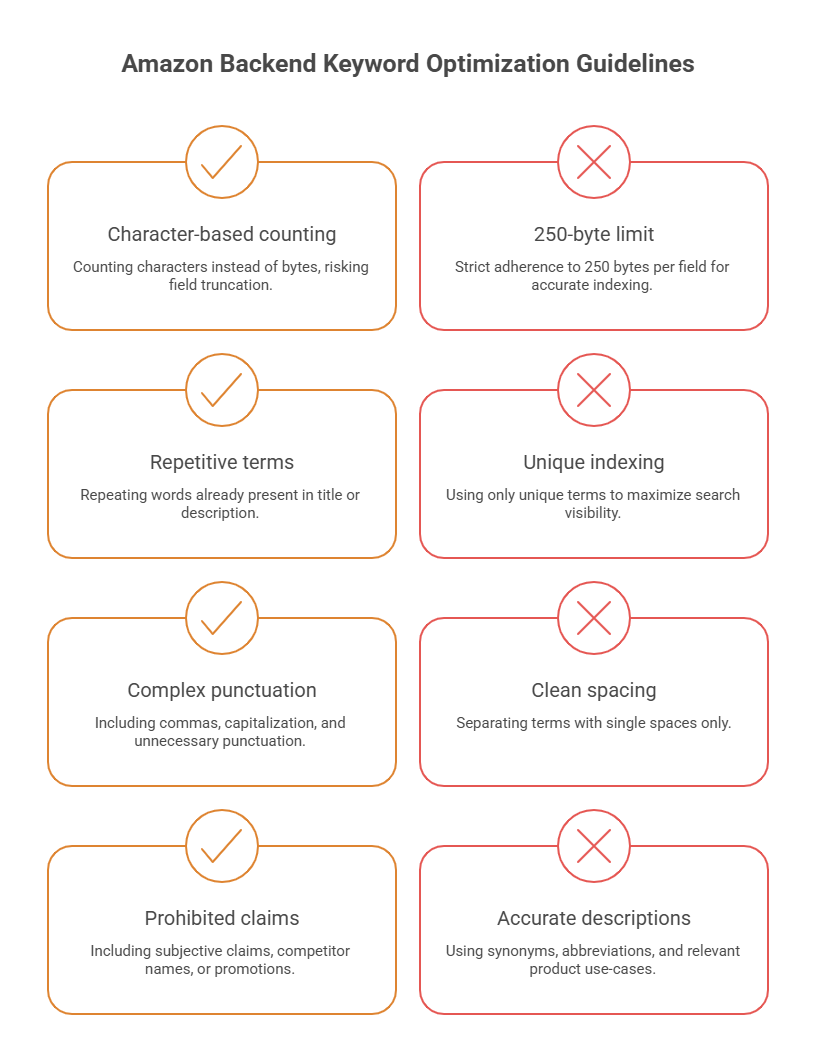
  • Backend Search Terms
  • Image Sequencing
  • Mobile Conversion Experience

Strong Amazon listing services improve both discoverability and conversion rates simultaneously.

2. Solve Inventory Management Nightmares

Inventory instability damages rankings quickly.

Common operational issues include:

  • Stockouts
  • Overstocking
  • Stranded Inventory
  • Delayed Replenishment
  • Poor Sell-Through Rates

Amazon’s Inventory Performance Index (IPI) heavily influences storage capacity and operational flexibility.

Proven Fix

Implement:

  • Inventory Forecasting Systems
  • Replenishment Alerts
  • Sell-Through Monitoring
  • Sku Prioritization
  • Seasonal Demand Planning

Brands with stable inventory performance typically maintain stronger ranking consistency.

3. Reduce PPC Advertising Waste

Many sellers overspend on advertising without understanding profitability metrics.

Common PPC issues include:

  • High ACoS
  • Weak Keyword Targeting
  • Poor Campaign Segmentation
  • Broad Match Inefficiencies
  • Wasted Branded Spend

Proven Fix

Optimize campaigns using:

  • Negative Keyword Filtering
  • Bid Adjustments
  • Search Term Isolation
  • Campaign Segmentation
  • Profitability Analysis

PPC optimization should align with inventory availability and conversion performance.

4. Prevent Account Suspensions and Policy Violations

Policy enforcement has become stricter across Amazon marketplaces.

Common triggers include:

  • Restricted Products
  • Inauthenticity Claims
  • Review Manipulation
  • Late Shipment Rates
  • Documentation Failures

Proven Fix

Build compliance monitoring systems for:

  • Invoices
  • Authenticity Documentation
  • Account Health Alerts
  • Performance Metrics
  • Listing Accuracy

Fast response time reduces escalation risks significantly.

5. Manage Pricing Wars and Buy Box Pressure

Aggressive competition often creates destructive pricing cycles.

This reduces:

  • Margins
  • Profitability
  • Buy Box consistency

Proven Fix

Focus on:

  • Fulfillment performance
  • Seller metrics
  • Listing quality
  • Review strengths
  • Inventory stability

Price alone does not guarantee Buy Box ownership.

6. Solve Product Review and Reputation Problems

Low review velocity weakens conversion performance.

At the same time, policy violations around review generation create suspension risks.

Proven Fix

Use compliant strategies:

  • Automated review requests
  • Post-purchase workflows
  • Customer experience optimization
  • Packaging improvements
  • Faster support response times

Avoid manipulative review tactics entirely.

7. Improve Cash Flow and Payment Stability

Amazon payment cycles often create operational pressure for growing sellers.

Cash flow problems worsen during:

  • Seasonal spikes
  • Inventory expansion
  • Aggressive advertising periods

Proven Fix

Improve forecasting across:

  • Inventory purchasing
  • Advertising budgets
  • Fulfillment costs
  • Expected payout cycles

Financial visibility improves operational stability significantly.

8. Resolve FBA Shipping and Fulfillment Problems

Fulfillment issues affect:

  • Customer satisfaction
  • Ranking performance
  • Account health metrics

Common issues include:

  • Delayed check-ins
  • Lost inventory
  • Inbound shipment discrepancies
  • Damaged packaging

Proven Fix

Maintain:

  • Shipment documentation
  • Reconciliation tracking
  • Packaging standards
  • Warehouse coordination
  • Inbound monitoring systems

Operational discipline reduces long-term FBA disruptions.

9. Protect Listings From Hijacking and IP Complaints

Unauthorized sellers and IP disputes remain major marketplace risks.

These problems can:

  • Damage brand reputation
  • Reduce pricing control
  • Confuse customers
  • Trigger listing suppression

Proven Fix

Protect listings using:

  • Brand Registry enrollment
  • Trademark protection
  • Monitoring software
  • Authorized reseller controls
  • Proactive complaint management

Brand protection is now essential for marketplace scalability.

Amazon Escalation Path for Unresolved Issues

Many sellers struggle because frontline Seller Support agents often have limited authority.

When standard cases fail, escalation should follow this order:

  1. Standard Seller Support case
  2. Reopened the case with evidence
  3. Account Health escalation
  4. Captive team escalation
  5. Executive Seller Relations escalation
  6. Agency-assisted escalation support

Documentation quality significantly improves escalation outcomes.

Seller Support KPI Benchmarks and Performance Reality

Many sellers misunderstand Amazon’s operational expectations.

Important KPI benchmarks include:

KPI

Recommended Target

Order Defect Rate Below 1%
Late Shipment Rate Below 4%
Valid Tracking Rate Above 95%
Cancellation Rate Below 2.5%
Inventory Performance Index Above 400
ACoS Target Varies by margin structure

Strong operational performance improves both visibility and account stability.

Prevention Systems for Long-Term Account Stability

The best marketplace strategy focuses on prevention rather than constant recovery.

Build Weekly Operational Reviews

Audit:

  • Account health
  • Stranded inventory
  • PPC performance
  • Suppression alerts
  • Review activity

Centralize Documentation

Maintain organization:

  • Invoices
  • Compliance files
  • Shipment records
  • Support case history

Monitor Listing Changes

Unexpected listing edits often create:

  • Suppressed ASINs
  • Indexing problems
  • Variation issues

Create Escalation SOPs

Internal escalation workflows improve response speed during account emergencies.

Real-World Seller Recovery Scenarios

A home goods seller experienced a 42% traffic decline after multiple ASIN suppressions triggered by incomplete image requirements and variation inconsistencies.

After restructuring:

  • Listing attributes
  • Image compliance
  • Variation hierarchy
  • Backend search terms

The seller recovered indexing across major keywords within 45 days and restored conversion performance during the next sales cycle.

In another case, a supplement brand reduced advertising waste by 31% after restructuring campaign segmentation and removing low-converting search terms from broad match campaigns.

These examples show how operational fixes often create substantial marketplace recovery opportunities.

Conclusion

Amazon's growth depends on operational consistency as much as product quality.

From Amazon listing errors and inventory problems to policy compliance and PPC inefficiencies, sellers now face a highly competitive and operationally demanding marketplace environment.

The businesses that succeed in 2026 will not simply react to problems after they happen. They will build proactive systems for:

  • Monitoring
  • Compliance
  • Optimization
  • Escalation
  • Operational Stability

Whether you are facing suppressed listings, account warnings, or ongoing Amazon seller problems, structured issue management can significantly improve visibility, profitability, and long-term account health.

If your business needs professional help resolving Amazon listing issues and marketplace disruptions, contact us today for expert help.

FAQs About Amazon Seller Problems

1. Can seasonal traffic spikes increase Amazon listing suppression risks?

Yes. High seasonal activity often increases catalog update frequency, pricing changes, and inventory adjustments. These rapid operational changes can trigger listing inconsistencies, attribute conflicts, or compliance flags that increase suppression risks during peak sales periods.

2. Does Amazon penalize frequent listing edits?

Frequent listing edits are not automatically penalized, but inconsistent updates can confuse Amazon’s catalog system. Repeated title, category, or attribute changes may temporarily affect indexing, ranking stability, or listing visibility if not managed carefully.

3. How long should sellers wait before escalating unresolved support cases?

Most sellers should escalate after 48 to 72 hours if Seller Support provides generic responses or fails to address the root issue. Maintaining detailed documentation and case references improves escalation effectiveness significantly.

4. Can poor account health affect advertising performance?

Yes. Listings with compliance issues, suppressed ASINs, or customer experience problems may experience reduced visibility, lower conversion rates, and weaker advertising efficiency, even when PPC campaigns remain active.

5. What operational area should sellers audit first during sudden sales drops?

Start with listing status and inventory availability. Suppressed listings, stranded inventory, Buy Box loss, or indexing issues often create immediate traffic and conversion declines before advertising or ranking problems become visible.

7 Best Amazon Agency Services for Scaling Brands Fast in 2026

Amazon Listing Agencies

Scaling on Amazon is no longer just about launching products and running ads. Brands now compete inside a marketplace shaped by algorithm changes, rising advertising costs, stricter compliance policies, and increasingly sophisticated competitors.

According to Amazon’s 2025 Small Business Empowerment Report, independent sellers sold more than 4.5 billion products globally in 2024, averaging over 8,600 products every minute. As competition intensifies, operational execution and marketplace optimization have become critical growth factors.

That is why more brands are partnering with specialized Amazon listing agencies and marketplace management providers to improve visibility, conversion rates, advertising efficiency, and operational consistency.

This guide breaks down the 7 best Amazon agency services for 2026, including:

  • core strengths
  • pricing benchmarks
  • scalability fit
  • ecosystem integrations
  • hidden risks
  • operational capabilities

If your business needs scalable Amazon product listing services and long-term marketplace growth support, connect with our experts today to schedule a consultation and discover strategies designed to improve visibility, conversions, and operational performance on Amazon.

Why Brands Are Outsourcing Amazon Growth in 2026

Amazon has evolved into a highly operational marketplace where growth depends on:

  • Listing Optimization
  • Advertising Efficiency
  • Inventory Coordination
  • Account Health Management
  • Compliance Monitoring
  • Analytics
  • Conversion Optimization

Many internal ecommerce teams struggle to manage all these functions simultaneously.

As a result, brands increasingly outsource the following:

  • Amazon selling services
  • Catalog management
  • PPC operations
  • Marketplace Compliance
  • Account Optimization
  • Creative Asset Management

The goal is no longer just operational support. Brands now want marketplace scalability.

What Amazon Agency Services Actually Do

Modern Amazon sells services that usually combine multiple operational functions under one management structure.

Typical agency services include the following:

  • Amazon SEO optimization
  • Product listing management
  • PPC campaign management
  • A+ Content optimization
  • Storefront design
  • Inventory coordination
  • Compliance monitoring
  • Account health management
  • Analytics reporting
  • Marketplace expansion support

Some agencies specialize in:

  • Enterprise brands
  • Amazon advertising
  • Catalog-heavy operations
  • International expansion
  • FBA management

Others focus heavily on startup sellers or emerging private-label brands.

Understanding agency specialization is critical before choosing a partner.

7 Best Amazon Agency Services for Scaling Brands Fast

1. Amazon Listing Service

Overview

Amazon Listing Service focuses heavily on scalable marketplace operations, listing optimization, and catalog management for growing Amazon sellers.

The company provides:

  • Amazon product listing services
  • Catalog optimization
  • Suppressed listing fixes
  • Inventory support
  • Marketplace management
  • SEO optimization
  • Content enhancement

Key Features

  • Large catalog management support
  • Amazon SEO optimization
  • Listing suppression recovery
  • Variation relationship management
  • Marketplace account support
  • Multi-SKU operational workflows

Why It Stands Out

The agency is particularly strong for:

  • Catalog-heavy sellers
  • Operationally complex accounts
  • Brands experiencing listing quality issues
  • Businesses requiring scalable listing support

2. Tinuiti

Overview

Tinuiti is known for enterprise-level ecommerce growth management across Amazon and other marketplaces.

Key Features

  • Advanced Amazon advertising
  • DSP campaign management
  • Cross-channel analytics
  • Retail media strategy
  • Enterprise reporting

Why It Stands Out

Tinuiti works well for:

  • Large brands
  • Omnichannel sellers
  • Advanced advertising strategies
  • Enterprise analytics requirements

3. Pattern

Overview

Pattern combines marketplace management with ecommerce acceleration and operational support.

Key Features

  • Marketplace operations
  • Fulfillment coordination
  • Brand protection
  • International expansion
  • Advanced reporting

Why It Stands Out

Pattern is strong for:

  • Global Brands
  • Marketplace Expansion
  • Operational Scaling
  • Fulfillment-Heavy Operations

4. Momentum Commerce

Overview

Momentum Commerce focuses heavily on analytics and retail media optimization.

Key Features

  • Retail media analytics
  • Amazon growth forecasting
  • Conversion optimization
  • Market intelligence
  • Operational reporting

Why It Stands Out

Excellent for:

  • Data-driven brands
  • Analytics-focused scaling
  • Retail media optimization

5. Envision Horizons

Overview

Envision Horizons supports emerging and mid-sized ecommerce brands.

Key Features

  • Amazon PPC management
  • Listing optimization
  • Creative asset support
  • DSP advertising
  • Brand strategy

Why It Stands Out

Strong fit for:

  • growing private-label brands
  • DTC companies entering Amazon's
  • creative-focused growth strategies

6. MindgruveMacarta

Overview

MindgruveMacarta combines digital commerce consulting with marketplace growth services.

Key Features

  • Marketplace advertising
  • Brand strategy
  • Cross-platform growth
  • Creative production
  • Commerce consulting

Why It Stands Out

Works well for:

  • Omnichannel brands
  • Digital-first retailers
  • Integrated marketing strategies

7. Clutch Agency Marketplace

Overview

The Clutch Amazon Agency Directory provides a marketplace of vetted Amazon service providers.

Key Features

  • Verified agency reviews
  • Agency comparisons
  • Service filtering
  • Geographic segmentation
  • Industry specialization

Why It Stands Out

Useful for:

  • Initial vendor research
  • Agency comparisons
  • Service discovery
  • Budget evaluation

Amazon SEO Agency Features Comparison 2026

Agency

Best For

Core Strength

Estimated Pricing

Amazon Listing Service Catalog-heavy sellers Listing optimization $500 to $8,000+
Tinuiti Enterprise brands Advertising & analytics Enterprise pricing
Pattern Global brands Operational scaling Custom pricing
Momentum Commerce Analytics-driven sellers Retail media optimization Mid-enterprise
Envision Horizons Growing DTC brands PPC & creative support Mid-market
MindgruveMacarta Omnichannel brands Commerce consulting Variable
Clutch Directory Agency research Vendor discovery Varies

Agency Segmentation by Business Stage

Startup Sellers

Best fit:

  • affordable listing support
  • basic PPC management
  • keyword optimization

Recommended focus:

  • operational stability
  • conversion optimization
  • foundational SEO

Mid-Sized Brands

Best fit:

  • catalog management
  • advertising scalability
  • inventory coordination
  • reporting systems

Recommended focus:

Best fit:

  • profitability
  • operational efficiency
  • ranking growth

Enterprise Sellers

Best fit:

  • advanced analytics
  • DSP advertising
  • omnichannel coordination
  • global expansion

Recommended focus:

  • operational integration
  • automation
  • marketplace dominance

Pricing Benchmarks and Expected Costs

Pricing varies based on:

  • SKU count
  • ad spend
  • operational complexity
  • international marketplaces
  • creative requirements

Typical ranges include:

Service Type

Typical Monthly Cost

Basic listing optimization $300 to $1,500
Full marketplace management $2,000 to $15,000+
Enterprise advertising management Percentage of ad spend
Catalog cleanup projects Project-based pricing
International expansion support Custom pricing

Brands should evaluate pricing based on operational ROI rather than monthly fees alone.

Hidden Costs and Risks Brands Overlook

Many sellers focus only on agency pricing while ignoring operational risks.

Weak Reporting Transparency

Some agencies provide limited visibility into:

  • ad performance
  • profitability
  • operational workflows
  • escalation processes

Overdependence on One Vendor

Relying entirely on one provider without internal oversight creates long-term operational risk.

Poor Marketplace Compliance

Aggressive optimization tactics sometimes create:

  • policy violations
  • listing suppressions
  • account health issues

Lack of Operational Scalability

Some agencies perform well for small catalogs but struggle with:

  • large SKU counts
  • international operations
  • complex inventory structures

Operational scalability should always be evaluated early.

Ecosystem and Integration Fit

Strong marketplace agencies should integrate smoothly with:

  • Shopify
  • ERP systems
  • PIM platforms
  • inventory software
  • analytics platforms
  • advertising tools

Integration quality directly affects:

  • reporting accuracy
  • operational speed
  • inventory synchronization
  • catalog consistency

This becomes increasingly important for multi-channel brands.

Decision Framework for Choosing the Right Agency

Evaluate agencies across five scoring categories:

Evaluation Area Importance
Marketplace expertise High
Reporting transparency High
Scalability High
Integration capabilities Medium
Communication structure High

Ask:

  • Can they scale with your catalog?
  • Do they understand your product category?
  • How do they handle escalation?
  • What KPIs do they prioritize?
  • How transparent is reporting?

The best partner is not necessarily the cheapest agency. It is the provider most aligned with your operational growth strategy.

Actual events show how rapidly marketplace operations can scale with the right support systems. In 2023, Anker continued expanding its multi-category Amazon growth strategy by combining listing optimization, advertising management, and operational coordination across multiple global marketplaces. Their growth highlights how structured marketplace management directly impacts long-term scalability.

AI-Driven Listing Optimization

AI tools increasingly automate:

  • keyword analysis
  • listing recommendations
  • content optimization
  • image sequencing

Predictive Advertising Systems

Machine learning models now optimize:

  • bidding
  • budget allocation
  • conversion forecasting
  • profitability targeting

Multi-Marketplace Coordination

Agencies increasingly manage operations across:

  • Amazon
  • Walmart Marketplace
  • TikTok Shop
  • eBay
  • Shopify ecosystems

Operational Automation

Workflow automation continues improving:

  • inventory monitoring
  • suppression alerts
  • PPC adjustments
  • reporting generation

Operational efficiency will become a major differentiator for agencies moving forward.

Conclusion

Amazon marketplace growth now requires much more than isolated listing optimization or basic PPC campaigns.

Brands need coordinated operational support across:

  • SEO
  • catalog management
  • advertising
  • compliance
  • analytics
  • inventory
  • customer experience

The right agency partnership can accelerate visibility, improve operational stability, and support scalable long-term growth.

Whether you are launching your first products or scaling a multi-marketplace brand, choosing the right Amazon listing agencies and operational support structure is now a critical business decision.

If your business needs scalable Amazon selling services and marketplace optimization support, connect with the experts at Amazon Listing Service today to schedule a consultation and discuss strategies designed to improve visibility, streamline operations, and accelerate long-term Amazon growth.

FAQs About Amazon Agency Services

1. Do Amazon agencies usually require long-term contracts?

Some agencies operate on monthly retainers while others require six to twelve-month agreements. Contract structure often depends on operational complexity, advertising management scope, and the level of marketplace support required.

2. Can Amazon agencies help with marketplace expansion outside the United States?

Yes. Many agencies support international marketplace expansion by handling localization, compliance requirements, catalog setup, translation coordination, and operational workflows across multiple Amazon regional marketplaces.

3. Are Amazon agency services suitable for wholesale sellers?

Yes. Wholesale sellers often require listing optimization, inventory coordination, Buy Box monitoring, and pricing management support. Agencies can help improve operational consistency and marketplace visibility for wholesale-focused accounts.

4. How involved should internal teams remain after hiring an Amazon agency?

Internal oversight remains important. Brands should still monitor KPIs, inventory planning, profitability goals, and strategic direction while agencies handle operational execution and marketplace optimization tasks.

5. Can agencies support Amazon Vendor Central accounts as well?

Some agencies specialize in Seller Central, while others support both Vendor Central and hybrid marketplace models. Businesses should confirm platform expertise before selecting a marketplace management partner.

Amazon SEO Services 2026 Guide for Growth & Visibility

Amazon Seo Services

Selling on Amazon has become significantly more competitive as marketplaces grow more saturated across nearly every category. In 2026, visibility alone is no longer enough. Sellers must optimize listings strategically to improve ranking relevance, increase click-through rates, and convert traffic efficiently.

This is why businesses increasingly invest in professional Amazon SEO services to strengthen marketplace visibility and improve long-term organic growth.

Today, successful sellers rely on structured Amazon SEO optimization strategies that combine keyword research, conversion-focused content, image optimization, and data-driven performance improvements.

At the same time, Amazon's search engine optimization has evolved beyond simple keyword placement. Amazon’s ranking system now evaluates customer behavior, conversion performance, listing quality, and sales momentum to determine product visibility.

As competition intensifies, businesses are also prioritizing continuous Amazon search optimization to maintain rankings and adapt to changing marketplace trends.

In this guide, we’ll explore how Amazon SEO works, what professional optimization services include, the top Amazon SEO agencies sellers should know about, and how businesses can improve long-term growth and visibility on Amazon.

What Are Amazon SEO Services and Why They Matter

Professional Amazon SEO services help sellers improve product visibility, search rankings, and conversion performance within Amazon’s marketplace.

Unlike traditional Google SEO, Amazon search engine optimization focuses heavily on:

  • Purchase Intent
  • Conversion Rate
  • Sales Velocity
  • Customer Engagement
  • Listing Relevance

This approach means ranking success depends not only on keywords but also on how effectively listings convert shoppers into buyers.

Strong Amazon SEO optimization helps sellers:

  • Improve organic rankings
  • Increase click-through rates
  • Strengthen product discoverability
  • Improve conversions
  • Reduce dependence on paid ads over time

A strong real-world example of Amazon listing optimization can be seen with Coca-Cola, which used enhanced product content and optimized brand experiences on Amazon to improve customer engagement and product discovery across the marketplace.

How Amazon SEO Works

Amazon’s algorithm evaluates several ranking signals to determine which products appear in search results.

  • Search Relevance: Keyword alignment between shopper searches and listing content affects visibility.
  • Conversion Performance: Listings with stronger conversion rates often gain ranking advantages.
  • Customer Engagement: Click-through rates, reviews, and sales consistency influence visibility.
  • Sales Velocity: Products generating consistent sales momentum usually rank higher.
  • PPC Data Signals: Advertising performance can strengthen broader Amazon search optimization strategies by identifying high-converting keywords and shopper behavior patterns.

According to Amazon Advertising, products with optimized detail pages, including strong titles, bullet points, and images, are more likely to improve shopper engagement and conversion performance across Amazon search results.

What’s Included in Amazon SEO Services

Professional Amazon SEO services often include multiple optimization layers.

Keyword Research

Keyword research drives Amazon ranking and visibility by helping sellers identify high-intent search terms customers actually use.

A strong Amazon search engine optimization strategy begins with:

  • Competitor keyword analysis
  • Search volume research
  • Indexing opportunities
  • Backend keyword planning

Listing Copywriting

Optimized titles and bullets improve conversion rates by helping shoppers quickly understand product value and relevance.

Professional Amazon SEO optimization includes:

  • Title optimization
  • Bullet point structuring
  • Conversion-focused descriptions
  • Keyword integration

A+ Content Optimization

Enhanced brand content improves engagement and product presentation.

Backend Search Terms

Backend keyword fields support additional ranking opportunities.

Image Optimization

High-quality images increase click-through and trust by improving visual engagement and purchase confidence.

Strong image optimization strategies include:

  • Lifestyle imagery
  • Infographics
  • Compliance-focused formatting
  • Mobile-friendly visuals

Top Amazon SEO Agencies Sellers Should Know About

1. Vserve

Vserve provides Amazon SEO services, listing optimization, metadata writing, catalog management, and end-to-end marketplace support. The company focuses on improving product visibility, keyword relevance, and conversion performance through structured Amazon SEO optimization strategies designed for scalable growth.

2. My Amazon Guy

Focuses on Amazon listing optimization, PPC management, and catalog troubleshooting for sellers looking to improve visibility and performance. The agency is known for combining SEO strategy with operational fixes that help brands scale on Amazon more effectively.

3. Amazon Listing Service

Offers listing optimization, metadata writing, storefront setup, and marketplace management support for Amazon sellers. It helps brands improve discoverability and conversion rates through structured Amazon SEO services and optimized product content strategies.

4. Pattern

Specializes in ecommerce acceleration, marketplace analytics, and brand growth strategies for Amazon and other digital channels. The company focuses on improving sales performance through data-driven insights and operational optimization.

5. Canopy Management

Provides Amazon PPC and SEO management solutions designed to improve ranking visibility and advertising performance. It helps brands align paid and organic strategies to maximize marketplace growth and efficiency.

6. Incrementum Digital

Focuses on Amazon advertising, listing optimization, and performance-driven growth strategies. The agency supports sellers in improving keyword rankings and conversion performance through structured Amazon SEO optimization campaigns.

7. Nuanced Media

Supports brands with Amazon marketplace growth, SEO optimization, and advertising strategy development. It helps businesses improve product visibility and long-term sales performance through integrated Amazon SEO services.

8. BellaVix

Offers full-service Amazon growth management, including listing optimization, PPC management, and account strategy. The agency focuses on helping brands scale efficiently while improving conversion performance and organic rankings.

9. Thrasio

Supports marketplace scaling, brand acquisition, and operational optimization for Amazon brands. It focuses on improving efficiency and growth performance across acquired ecommerce businesses through structured operational systems.

Amazon SEO Agency Services & Capabilities Comparison Table


Agency

Core Strength

Best For

Vserve Amazon SEO + catalog management Scalable marketplace operations
My Amazon Guy SEO + PPC optimization Growth-focused Amazon sellers
Amazon Listing Service Listing + storefront optimization Visibility improvement
Pattern Data-driven ecommerce growth Enterprise brands
Canopy Management PPC + SEO integration Advertising-led growth
Incrementum Digital SEO + PPC strategy Performance optimization
Nuanced Media Amazon marketing strategy Mid-sized brands
BellaVix Full-service Amazon management Scaling sellers
Thrasio Marketplace scaling Brand acquisition model


How Experts Optimize Amazon Listings

  • Product Titles: Optimize the title based on keyword relevance, readability, shopper intent, and compliance
  • Bullet Points: Optimized bullets improve conversion performance by structuring product benefits clearly.
  • Product Descriptions: Descriptions help reinforce value propositions and keyword relevance.
  • Backend Keywords: Backend search terms improve indexing opportunities without affecting front-end readability.
  • Images: High-quality visuals improve engagement and support stronger Amazon search optimization performance.

The Role of PPC in Amazon SEO Strategy

PPC data strengthens the organic SEO performance strategy by identifying:

  • High-converting keywords
  • Click-through trends
  • Conversion opportunities
  • Search term performance

Professional Amazon SEO services often integrate advertising insights into broader optimization workflows.

This creates stronger alignment between paid and organic visibility strategies.

Long-Term Amazon SEO Growth Strategy

Continuous listing optimization ensures long-term growth because Amazon rankings constantly shift based on:

  • Competition
  • Customer Behavior
  • Pricing
  • Conversion Rates
  • Inventory Availability

Strong Amazon SEO optimization requires ongoing:

  • Keyword Updates
  • Listing Testing
  • Image Improvements
  • Competitor Analysis
  • Conversion Optimization

DIY vs Professional Amazon SEO Services

Many sellers attempt internal optimization initially. However, advanced marketplace competition often requires specialized expertise.

DIY limitations include the following:

  • Limited Keyword Tools
  • Weaker Conversion Strategy
  • Inconsistent Optimization
  • Slower Testing Processes

Professional Amazon SEO services provide:

  • Marketplace expertise
  • Data-driven optimization
  • Scalability
  • Structured growth strategy

How to Choose the Right Amazon SEO Agency

Businesses should evaluate the following:

  • Marketplace Experience: Choose agencies with proven Amazon marketplace expertise.
  • SEO + PPC Integration: Strong agencies combine advertising insights with SEO workflows.
  • Reporting Transparency: Performance visibility is critical for long-term optimization.
  • Scalability: The provider should support future catalog growth.
  • Content Quality: Strong copywriting directly affects conversion performance.

If your goal is sustainable marketplace growth, connect with Amazon Listing Service today to explore scalable Amazon SEO optimization strategies designed to improve visibility, rankings, and long-term sales performance.

Conclusion

Amazon competition in 2026 requires far more than simply listing products online. Sellers must continuously optimize visibility, conversion performance, and customer engagement to maintain marketplace growth.

Professional Amazon SEO services help businesses improve rankings, strengthen discoverability, and build long-term organic visibility through structured optimization strategies.

From keyword research and listing optimization to image enhancement and PPC integration, strong Amazon search engine optimization creates scalable growth opportunities for brands competing in increasingly crowded marketplaces.

If your business is ready to improve rankings, increase visibility, and strengthen long-term marketplace performance, connect with the experts at Amazon Listing Service today.

Frequently Asked Questions

1. How long does Amazon SEO typically take to improve rankings?

Amazon SEO improvements can begin affecting visibility within weeks, although stronger ranking gains usually require consistent optimization over several months. Factors such as competition, listing history, pricing, inventory availability, and conversion performance all influence how quickly products gain stronger organic visibility across Amazon search results.

2. Why do some Amazon listings fail despite strong products?

Many listings fail because they lack optimized content, keyword targeting, competitive imagery, or conversion-focused structure. Even strong products struggle when shoppers cannot easily discover them or quickly understand their value proposition. Effective optimization improves discoverability, trust, and overall marketplace competitiveness significantly.

3. Does inventory availability affect Amazon SEO performance?

Yes. Frequent stockouts can negatively impact ranking stability because Amazon prioritizes products that consistently meet customer demand. Inventory disruptions may reduce sales velocity and organic visibility over time, making operational consistency an important factor within broader Amazon search optimization strategies and long-term ranking performance.

4. Can Amazon SEO help reduce advertising costs over time?

Strong organic rankings can reduce dependence on paid advertising because products gain more visibility naturally within search results. While PPC remains important for growth, effective Amazon SEO optimization helps improve long-term traffic sustainability and lowers customer acquisition pressure across competitive marketplace categories.

How Amazon Virtual Assistants Help You Save Time and Increase Sales in 2026

Amazon Virtual Assistant Services

Running a successful Amazon business requires much more than uploading products and managing orders. Sellers now deal with inventory coordination, listing optimization, PPC advertising, customer service, compliance monitoring, and operational reporting simultaneously. As marketplaces become more competitive, operational overload has become one of the biggest growth barriers for sellers.

According to Amazon’s 2025 Small Business Empowerment Report, independent sellers sold more than 4.5 billion items globally in 2024, averaging over 8,600 products every minute. This growing marketplace activity has significantly increased the operational demands placed on ecommerce teams.

That is why more brands are investing in professional Amazon virtual assistant services to improve efficiency, reduce operational bottlenecks, and support long-term marketplace growth.

This guide explains:

  • What an Amazon virtual assistant does
  • How Amazon VAs improve business operations
  • The tasks they handle
  • Hiring frameworks
  • Onboarding systems
  • Pricing expectations
  • Common mistakes to avoid

'

If your business needs scalable operational support, contact the experts at Amazon Listing Service today to schedule a consultation.

What Is an Amazon Virtual Assistant?

An Amazon virtual assistant is a remote professional who helps sellers manage operational, administrative, and marketplace-related tasks within Amazon Seller Central and related ecommerce systems.

Amazon VAs typically support:

  • Listing management
  • Inventory coordination
  • Customer support
  • Advertising operations
  • Reporting
  • Research
  • Administrative workflows

They help reduce operational overload so sellers can focus on the following:

  • Growth Strategy
  • Sourcing
  • Expansion
  • Profitability

Many growing brands now use a dedicated virtual assistant for Amazon business support as part of their operational scaling strategy.

Why Amazon Sellers Hire Virtual Assistants in 2026

Amazon operations have become increasingly time-intensive.

Sellers now manage:

  • Complex inventory systems
  • Advertising optimization
  • Policy compliance
  • Customer experience metrics
  • Marketplace competition
  • Multi-channel coordination

This creates operational strain for:

  • Solo entrepreneurs
  • Small ecommerce teams
  • Scaling brands

Virtual assistants help sellers:

  • Save time
  • Reduce repetitive workload
  • Improve response speed
  • Maintain operational consistency
  • Increase scalability

For many businesses, delegation becomes necessary before sustainable growth is possible.

Benefits of Amazon Virtual Assistants

Save Time on Operational Tasks

Virtual assistants handle repetitive daily responsibilities, freeing sellers to focus on high-value business activities.

Improve Marketplace Responsiveness

Fast response times improve:

  • Customer satisfaction
  • Account health
  • Review quality
  • Operational efficiency

Reduce Hiring Costs

Compared to full in-house staffing, remote VA support often provides more flexible operational scaling.

Increase Operational Capacity

A trained Amazon virtual assistant for sellers can manage workflows across:

  • Listings
  • Customer Support
  • Inventory
  • Advertising Coordination
  • Reporting

Support Business Growth

Delegating operational tasks allows business owners to focus more on:

  • Product expansion
  • Supplier negotiations
  • Brand development
  • Marketplace growth

Real-world ecommerce events show how delegation improves marketplace scalability. In a case study published by Helium 10, growing Amazon sellers reported substantial productivity improvements after outsourcing repetitive marketplace operations such as listing management, customer support, and inventory coordination to trained virtual assistants. Many sellers were able to redirect their focus toward product development and growth strategy instead of daily operational tasks.

What Tasks Does an Amazon VA Handle?

Customer Service and Account Support

Virtual assistants often manage:

  • Buyer messages
  • Return requests
  • Refund coordination
  • Customer issue escalation
  • Feedback monitoring

Fast support response improves customer satisfaction metrics significantly.

Listing Optimization and Amazon SEO

Many VAs assist with:

  • Keyword research
  • Title optimization
  • Bullet point updates
  • Backend search terms
  • Image coordination
  • Category management

Strong listing optimization improves:

  • Discoverability
  • Conversion rates
  • Ranking performance

PPC Advertising Management

Experienced VAs may support:

  • Campaign monitoring
  • Keyword research
  • Negative keyword filtering
  • Bid adjustments
  • Reporting analysis

Advertising support helps sellers control operational workload more effectively.

Inventory and Order Management

Operational support tasks often include:

  • Stock monitoring
  • Replenishment coordination
  • Shipment tracking
  • Stranded inventory management
  • FBA reconciliation

Inventory consistency strongly affects marketplace stability.

Product Research and Competitor Analysis

Virtual assistants may conduct:

  • Competitor tracking
  • Pricing analysis
  • Product opportunity research
  • Review analysis
  • Trend monitoring

Research support improves decision-making speed.

Social Media and Brand Support

Some VAs also assist with:

  • Content scheduling
  • Customer engagement
  • Social monitoring
  • Promotional coordination

This becomes especially useful for multichannel e-commerce brands.

Real-World Case Studies and ROI Examples

A mid-sized home goods seller struggled with delayed customer responses, inconsistent listing updates, and inventory management bottlenecks during seasonal demand spikes.

After hiring a dedicated Amazon VA, the company:

  • Reduced response times by 68%
  • Improved listing update speed
  • Stabilized inventory workflows
  • Reduced operational delays during peak season

Within six months, the seller increased operational efficiency without expanding its internal staff structure.

In another example referenced by Helium 10’s Amazon VA operational guide, sellers reported significant time savings after delegating repetitive marketplace management tasks to specialized virtual assistants.

These examples demonstrate how operational delegation often creates measurable scalability improvements.

How Much Does an Amazon Virtual Assistant Cost?

Pricing varies based on:

  • Experience level
  • Task complexity
  • Marketplace expertise
  • Workload volume
  • Time zone requirements

Typical pricing ranges include:

VA Type Estimated Cost
Entry-level VA $5 to $10/hour
Experienced Amazon VA $10 to $25/hour
Specialized PPC or SEO VA $20 to $40+/hour
Full operational support Monthly retainers

Project-based and full-time arrangements are also common.

Should You Hire an Amazon VA?

A virtual assistant becomes valuable when sellers experience:

  • Operational overload
  • Delayed task completion
  • Poor customer response times
  • Inconsistent listing management
  • Inventory coordination problems
  • Scaling bottlenecks

Businesses managing:

  • Multiple SKUs
  • Growing advertising campaigns
  • International marketplaces
  • Complex workflows

often benefit most from structured VA support.

Amazon VA Hiring Scorecard and Selection Framework

Before hiring, evaluate candidates across these categories:

Evaluation Area Importance
Seller Central experience High
Communication skills High
Amazon policy knowledge High
Listing optimization skills Medium
PPC understanding Medium
Reporting accuracy High
Time management High

Strong communication and operational reliability are often more important than advanced technical skills initially.

How to Hire an Amazon VA

Step 1: Define Operational Needs

Clarify:

  • Daily tasks
  • Workload expectations
  • Required skills
  • Reporting structure

Step 2: Choose Hiring Source

Common hiring platforms include:

  • Upwork
  • OnlineJobs.ph
  • Fiverr Pro
  • Ecommerce staffing agencies

Step 3: Test Operational Skills

Assign trial tasks involving:

  • Listing updates
  • Inventory tracking
  • Keyword research
  • Customer support

Step 4: Verify Amazon Experience

Ensure candidates understand:

  • Seller Central workflows
  • Account health policies
  • Inventory systems
  • Marketplace terminology

Step 5: Build Clear SOPs

Structured documentation improves onboarding success significantly.

Step-by-Step Onboarding SOP for Amazon VAs

Step 1: Create Access Controls

Use:

  • Permission-based access
  • Password management tools
  • Role-specific permissions

Never share unrestricted account access immediately.

Step 2: Provide SOP Documentation

Document:

  • Workflows
  • Escalation paths
  • Operational standards
  • Communication expectations

Step 3: Assign Limited Initial Tasks

Start with:

  • Customer messaging
  • Inventory monitoring
  • Reporting tasks

Expand responsibilities gradually.

Step 4: Schedule Performance Reviews

Weekly reviews improve:

  • Accountability
  • Workflow quality
  • Communication consistency

Step 5: Monitor KPIs

Track:

  • Response times
  • Task completion rates
  • Listing accuracy
  • Operational errors

Structured onboarding reduces operational risk substantially.

Risks, Mistakes, and How to Avoid Them

Poor Access Management

Unrestricted account access creates major security risks.

Weak Training Systems

Incomplete onboarding often causes:

  • Listing mistakes
  • Customer service errors
  • Inventory inconsistencies

Hiring Without Amazon Experience

General virtual assistants may struggle with Amazon-specific workflows.

Lack of Operational Oversight

Delegation without supervision often creates:

  • Compliance issues
  • Missed deadlines
  • Inconsistent execution

Overloading One VA

Assigning too many responsibilities reduces workflow quality and response speed.

AI-Assisted Workflow Automation

AI tools increasingly support the following:

  • Reporting
  • Keyword research
  • Operational monitoring
  • Customer response drafting

Specialized Amazon VA Roles

Many VAs now specialize in:

  • PPC management
  • Listing SEO
  • Inventory operations
  • Customer support

Multi-Marketplace Coordination

VAs increasingly support:

  • Amazon
  • Walmart Marketplace
  • Shopify
  • TikTok Shop
  • eBay

within unified ecommerce workflows.

Process Automation Integration

Operational automation tools continue improving efficiency across:

  • Inventory
  • Reporting
  • Customer communication
  • Task management

Conclusion

Amazon Marketplace growth depends heavily on operational consistency and execution speed.

As marketplaces become more competitive, sellers increasingly need support managing:

  • Listings
  • Inventory
  • Customer Service
  • Advertising
  • Reporting
  • Compliance

Professional Amazon virtual assistant services help businesses:

  • Reduce operational overload
  • Improve efficiency
  • Increase scalability
  • Support long-term marketplace growth

Whether you are a growing private-label seller or a large catalog brand, structured VA support can significantly improve operational performance and free up time for strategic growth.

If your business needs a reliable virtual assistant for Amazon business support, connect with the professionals at Amazon Listing Service today to schedule a consultation and discuss customized support solutions designed to improve efficiency, marketplace operations, and long-term business growth.

FAQs About Amazon Virtual Assistants

1. Can Amazon virtual assistants work across multiple marketplaces?

Yes. Many experienced Amazon VAs support operations across multiple regional marketplaces, including the United States, Canada, Europe, and Australia. They may also coordinate workflows for Walmart Marketplace, Shopify, and other ecommerce platforms.

2. How long does it usually take to train a new Amazon VA?

Basic operational onboarding may take one to two weeks, while advanced workflow integration can require several months, depending on task complexity, catalog size, and the seller’s internal systems.

3. Do Amazon virtual assistants usually work full-time or part-time?

Both models are common. Some businesses hire part-time support for customer service and administrative tasks, while larger sellers often maintain full-time VAs dedicated to operational management and marketplace coordination.

4. Can an Amazon VA help during seasonal sales periods?

Yes. Many sellers hire temporary or additional virtual assistants during peak seasons to manage increased order volume, customer inquiries, listing updates, and operational monitoring more efficiently.

5. What tools do Amazon virtual assistants commonly use?

Amazon VAs frequently use Seller Central, inventory management software, keyword research tools, project management systems, communication platforms, and reporting dashboards to coordinate marketplace operations effectively.

Amazon Store Management Explained for Brand Growth in 2026

Amazon Store Management Services

Selling on Amazon used to be simple. Upload products, run ads, and wait for orders. In 2026, that approach no longer works.

Today, Amazon is one of the most competitive ecommerce ecosystems in the world. Brands are competing on pricing, visibility, fulfillment speed, customer experience, advertising efficiency, and account compliance simultaneously. One operational mistake can reduce rankings, suppress listings, or trigger account health warnings that impact revenue overnight.

According to Amazon’s 2025 Small Business Empowerment Report, independent sellers now account for more than 60% of sales in Amazon’s store, and more than 75,000 independent sellers generated over $1 million in annual sales in 2024 alone. The scale of marketplace competition continues growing every year, making operational efficiency a major differentiator for brands.

That is why more brands are investing in Amazon store management services to improve operational consistency, marketplace visibility, and long-term profitability.

From listing optimization and PPC management to inventory coordination and analytics, modern Amazon management requires a structured strategy that combines SEO, advertising, operations, and customer experience.

This guide explains how Amazon store management works, what services are included, when businesses should outsource, and how to choose the right partner for sustainable marketplace growth in 2026.

If your business needs scalable marketplace account management support for Amazon operations, inventory coordination, and performance optimization, talk to the team at Amazon Listing Services.

What Is Amazon Store Management?

Amazon store management is the ongoing process of operating, optimizing, and scaling a brand's presence on Amazon Marketplace.

It combines multiple operational and marketing functions, including:

  • Product listing management
  • Marketplace SEO
  • PPC advertising
  • Inventory coordination
  • Fulfillment monitoring
  • Customer support
  • Account health management
  • Reporting and analytics
The goal of Amazon store management services is not simply maintaining a seller account. The real objective is maximizing product visibility, improving conversions, maintaining compliance, and increasing profitability across the marketplace.

As Amazon's algorithm and competitive landscape continue evolving, sellers now require structured ecommerce marketplace management services to stay competitive at scale.

What Is Included in Amazon Store Management Services?

Modern Amazon listing services and marketplace management programs typically cover five core operational areas.

Listing Optimization and Catalog Management

Your product listing directly impacts discoverability and conversion rates.

Amazon SEO optimization includes:

  • Keyword research
  • Product title optimization
  • Bullet point enhancement
  • Backend search term management
  • A+ content optimization
  • Product image coordination
  • Variation management
  • Catalog structure cleanup

Strong listing optimization helps products rank for high-intent customer searches while improving conversion once users land on the page.

For example, a supplement brand may improve conversions significantly simply by restructuring product titles, improving image sequencing, and optimizing mobile readability across listings.

Catalog consistency also becomes critical for large inventories. Poor parent-child relationships, duplicate ASINs, and inconsistent attributes often create indexing and visibility issues.

Amazon PPC Management and Growth Support

Advertising now plays a major role in Amazon marketplace growth.

Effective PPC management includes:

  • Sponsored Products campaigns
  • Sponsored Brands campaigns
  • Sponsored Display advertising
  • Keyword bid optimization
  • Search term analysis
  • Negative keyword management
  • Budget allocation
  • ROAS optimization

Without proper campaign management, brands often overspend on broad traffic while failing to convert high-intent searches.

A structured PPC strategy aligns advertising with:

  • Inventory availability
  • Seasonal demand
  • Keyword intent
  • Product lifecycle stage
  • Profit margin targets

This is why many growing brands combine Amazon listing services with advertising optimization under one management structure.

Inventory and FBA Management

Inventory issues directly impact rankings and customer experience.

Amazon store management teams typically support:

  • Inventory forecasting
  • FBA replenishment planning
  • Stock monitoring
  • Sell-through optimization
  • Overstock reduction
  • Return management coordination
  • Fulfillment performance tracking

Running out of stock can destroy ranking momentum built over months of advertising and SEO investment.

At the same time, excessive inventory creates storage fee pressure and operational inefficiencies.

Strong inventory management balances:

  • Demand forecasting
  • Ad spend
  • Seasonal trends
  • Warehouse limitations
  • Fulfillment timing

This operational layer is especially important for brands managing large SKU counts across multiple marketplaces.

Account Health, Compliance, and Customer Experience

Amazon prioritizes seller performance metrics heavily.

Store management teams monitor:

  • Order defect rate
  • Late shipment rate
  • Customer complaints
  • Policy violations
  • Intellectual property claims
  • Listing suppressions
  • Account health warnings

Even profitable stores can face operational disruption if compliance issues are ignored.

Customer experience management also includes:

  • Review monitoring
  • Buyer communication workflows
  • Return resolution support
  • Feedback management

This operational discipline helps brands protect long-term marketplace stability while maintaining seller reputation.

Reporting and Performance Analytics

Data analysis drives marketplace optimization.

Professional marketplace account management programs often include reporting on:

  • Conversion rates
  • Traffic sources
  • Advertising efficiency
  • Keyword rankings
  • Inventory turnover
  • Buy Box performance
  • Profitability trends
  • Category benchmarks

Analytics help brands identify:

  • Underperforming listings
  • Wasted ad spend
  • Seasonal opportunities
  • Margin leakage
  • High-converting keywords

Without centralized reporting, most sellers operate reactively instead of strategically.

When Should Businesses Outsource Amazon Store Management?

Not every seller needs external support immediately. However, certain operational signals indicate it may be time to outsource.

High Competition Is Reducing Visibility

If competitors consistently outrank your products despite similar pricing and reviews, your listings and advertising strategy likely require optimization.

This usually indicates weaknesses in:

  • Keyword targeting
  • Listing structure
  • Ad management
  • Catalog quality
  • Conversion optimization

Your Product Line Is Growing Rapidly

Managing 20 products is very different from managing 2,000 SKUs.

As catalogs grow, operational complexity increases dramatically.

  • Inventory synchronization
  • Variation relationships
  • Pricing management
  • Compliance monitoring
  • PPC coordination

At this stage, many businesses adopt structured ecommerce marketplace management services to maintain operational consistency.

Sales Performance Has Plateaued

Plateauing sales often indicate operational inefficiencies rather than product issues.

For example:

  • Listings may not target emerging keywords
  • Advertising may be wasting budget
  • Conversion rates may decline due to outdated content
  • Inventory gaps may suppress rankings

A marketplace management partner can identify and resolve these growth bottlenecks systematically.

Internal Teams Are Overloaded

Many ecommerce teams eventually reach operational limits. Marketing teams handle campaigns. Operations teams manage fulfillment. Customer support handles reviews and returns. Without centralized marketplace coordination, performance gaps appear quickly.

Outsourcing creates operational scalability without immediately expanding internal headcount.

Agency vs Freelancer vs In-House Management

Businesses evaluating Amazon management support typically compare three operational models.

Model

Advantages

Limitations

Freelancer Lower cost, flexible support Limited scalability, narrow expertise
In-house team Full operational control Higher hiring and training costs
Agency partner Multi-specialist expertise, scalable support Requires onboarding alignment

Freelancers may work well for:

  • Small catalogs
  • Short-term listing optimization
  • Isolated PPC projects

In-house teams are effective when:

  • Amazon is the company's primary revenue channel
  • Operational scale justifies dedicated staffing
  • Internal expertise already exists

Agency partnerships often provide the best balance for mid-sized and enterprise sellers requiring:

  • Operational scalability
  • Cross-functional expertise
  • Reporting consistency
  • Inventory coordination
  • Advertising management
  • Catalog optimization

Benefits of Outsourcing Amazon Marketplace Operations

Improved Operational Efficiency

Outsourced teams follow structured workflows that reduce delays, inconsistencies, and operational bottlenecks.

This creates faster execution across:

  • Listings
  • Campaigns
  • Inventory planning
  • Issue resolution

Better Marketplace Visibility

Experienced Amazon specialists understand:

  • Ranking factors
  • Keyword behavior
  • Conversion optimization
  • Advertising structure

This improves discoverability and listing performance over time.

Faster Scalability

As product catalogs expand, outsourced support provides operational flexibility without requiring major internal restructuring.

This is especially valuable during:

  • Seasonal demand spikes
  • Marketplace expansion
  • New product launches

Stronger Compliance Management

Amazon policies evolve constantly.

Dedicated management teams help reduce risks associated with:

  • Account suspensions
  • Listing violations
  • Restricted products
  • Policy changes

Centralized Marketplace Reporting

Consolidated reporting improves strategic decision-making while helping leadership teams track operational performance more accurately.

A good marketplace strategy directly impacts brand growth. In 2019, Nike adjusted its direct selling relationship with Amazon after facing challenges related to marketplace control, counterfeit products, and customer experience consistency. The move highlighted how critical structured marketplace operations and brand governance have become within large ecommerce ecosystems.

How to Choose the Right Amazon Store Management Partner

Not all providers offer the same level of operational capability.

Here are the most important evaluation criteria.

Marketplace Experience

Look for providers with proven experience managing:

  • Large catalogs
  • Multi-category stores
  • Amazon advertising
  • Inventory operations
  • Compliance management

Experience matters because Amazon operations connect closely with one another.

Reporting Transparency

A strong management partner should provide the following:

  • Clear KPIs
  • Campaign visibility
  • Operational reporting
  • Growth insights
  • Performance recommendations

Lack of transparency often creates operational blind spots.

Scalability and Process Structure

Ask how the provider handles:

  • Workflow management
  • Catalog scaling
  • Communication
  • Issue escalation
  • Account monitoring

Structured operational processes become critical as marketplace complexity increases.

Alignment With Business Goals

The right partner should align operations with:

  • Profitability goals
  • Inventory strategy
  • Growth objectives
  • Customer experience priorities

Marketplace management is not just about maintaining listings. It should directly support business growth.

Common Mistakes Brands Make on Amazon

Many marketplace performance issues stem from operational mistakes rather than product quality.

Common problems include:

  • Keyword stuffing in listings
  • Poor inventory forecasting
  • Duplicate product listings
  • Inconsistent catalog attributes
  • Weak mobile optimization
  • Unmanaged PPC campaigns
  • Ignoring account health warnings
  • Fragmented operational ownership

These problems compound over time and reduce overall marketplace efficiency.

Structured Amazon store management services help eliminate these operational gaps systematically.

Future Trends in Amazon Marketplace Management for 2026

Amazon operations are becoming increasingly data-driven and AI-assisted.

Here are the trends shaping marketplace management in 2026.

AI-Driven Listing Optimization

AI tools now help brands optimize:

  • Titles
  • Bullet Points
  • Search Terms
  • Product Descriptions
  • Image Sequencing

This improves keyword targeting and conversion efficiency at scale.

Predictive Inventory Forecasting

Machine learning models increasingly support:

  • Demand Prediction
  • Replenishment Timing
  • Seasonal Planning
  • Storage Optimization

This reduces both stockouts and overstock costs.

Automation in Marketplace Operations

Automation workflows now handle:

  • Pricing Adjustments
  • Campaign Bidding
  • Review Monitoring
  • Inventory Alerts
  • Compliance Tracking

This improves operational responsiveness while reducing manual workload.

Personalized Marketplace Experiences

Amazon's recommendation systems continue evolving toward more personalized customer journeys.

Brands with optimized catalog structures and strong behavioral data will gain competitive visibility advantages.

Conclusion

Amazon marketplace growth now depends on much more than product quality alone.

Success requires coordinated management across:

  • Listings
  • Advertising
  • Fulfillment
  • Inventory
  • Compliance
  • Analytics
  • Customer Experience

As operational complexity increases, more businesses are adopting professional Amazon store management services to improve scalability, protect account health, and maximize long-term marketplace performance.

Whether you are managing a growing catalog or trying to improve marketplace efficiency, structured operational support can significantly improve visibility, conversions, and profitability.

If your business needs scalable marketplace account management and operational support, connect with the team at Amazon Listing Services.

FAQs About Amazon Store Management Services

1. How long does it take to see results from Amazon store optimization?

Most sellers begin seeing measurable improvements within 60 to 90 days. Results depend on listing quality, competition, advertising strategy, inventory availability, and account history. Competitive categories often require longer optimization periods to improve rankings consistently.

2. Can Amazon store management help with international marketplace expansion?

Yes. Marketplace management teams often support expansion into global Amazon regions by handling localization, catalog setup, compliance requirements, inventory coordination, and operational workflows across multiple regional marketplaces simultaneously.

3. Do Amazon management services support seasonal sales planning?

Yes. Many providers help brands prepare for seasonal demand spikes through inventory forecasting, promotional planning, advertising adjustments, and fulfillment coordination to reduce stock risks and maximize peak-period sales opportunities.

4. What industries benefit most from Amazon marketplace management?

Industries with large product catalogs, high competition, and operational complexity benefit most. This includes electronics, beauty, supplements, apparel, home goods, automotive products, industrial supplies, and consumer packaged goods.

5. Can marketplace management improve Buy Box performance?

Yes. Consistent pricing, inventory availability, fulfillment efficiency, account health, and customer satisfaction all influence Buy Box eligibility. Structured operational management helps improve these performance signals over time.