



Last updated on April 24th, 2026
Launching on Amazon looks simple from the outside. Create an account, upload products, and start selling. However, many new sellers quickly discover that the real challenge begins after signup. Category restrictions, compliance checks, listing errors, weak product pages, and account verification delays can slow growth before the first sale even happens.
That is why successful brands treat launch as a system, not a single task. A strong Amazon start requires the right setup, accurate documentation, optimized listings, and operational readiness from day one. The sellers who prepare properly do not just launch faster. They build momentum faster.
According to Statista, Amazon is the leading online marketplace worldwide by gross merchandise value, which means visibility and readiness at launch can directly influence long-term growth potential for new sellers.
Table of Contents
Why Amazon Launch Preparation Matters
Core Services Needed to Launch an Amazon Store Successfully
Step-by-Step Amazon Store Launch Guide
When to Outsource Your Amazon Setup
Why Amazon Launch Preparation Matters

Amazon rewards sellers who start strong. Accurate listings, complete documentation, fast fulfillment readiness, and policy compliance can improve early performance signals. On the other hand, setup errors can create delays, suppressed listings, or poor conversion rates.
Therefore, launch preparation is not just administrative work. It is the foundation of future sales performance.
Core Services You Need to Launch Successfully
Amazon Seller Account Setup
Everything starts with the right account structure. This includes business details, tax information, identity verification, payment setup, and marketplace configuration.
For brands entering the United States marketplace, Amazon seller account setup for US market support can help reduce delays and ensure documentation is aligned correctly from the start.
Storefront and Brand Setup
Your storefront is where brand identity meets buyer trust. A professional Amazon store setup service helps create a polished storefront experience with branded collections, navigation, and consistent messaging.
This becomes especially valuable as your catalog expands.
Product Listing Optimization
Even new stores need optimized listings from day one. Titles, bullet points, images, backend keywords, and pricing all influence discoverability and conversion.
A structured Amazon store launch service often includes listing optimization so products are ready to compete immediately after launch.
Category and Compliance Approval
Some categories require approval before you can sell. Others require extra documentation or compliance evidence.
An Amazon category approval service helps sellers navigate restricted categories, documentation requests, and submission processes faster and with fewer mistakes.
Operational Readiness
A successful launch also requires systems behind the storefront, including:
- Inventory planning
- Fulfillment setup
- Return policies
- Customer service workflows
- Performance monitoring
- Advertising readiness
Without these foundations, early growth can become difficult to sustain.
Step-by-Step Amazon Store Launch Guide
Step 1: Choose the Right Selling Model
Decide whether you are launching as a private label brand, reseller, wholesaler, or manufacturer. Your model affects sourcing, branding, margins, and long-term strategy.
Step 2: Register and Verify Your Seller Account
Complete account creation carefully and submit accurate business information. Errors at this stage often create preventable delays.
Many brands Amazon seller account setup for US market to avoid compliance mistakes and speed up approval.
Step 3: Prepare Listings Before Going Live
Build optimized listings with strong titles, persuasive bullets, quality visuals, and keyword targeting before launch day.
Step 4: Configure Fulfillment and Inventory
Choose FBA, FBM, or a hybrid model. Then align stock levels, shipping processes, and replenishment plans.
Step 5: Launch With Visibility in Mind
Use promotions, PPC campaigns, and review generation strategies to create traction after launch.
Step 6: Monitor Performance and Improve Fast
Track sessions, conversion rate, ad performance, and customer feedback. Early adjustments often create long-term gains.
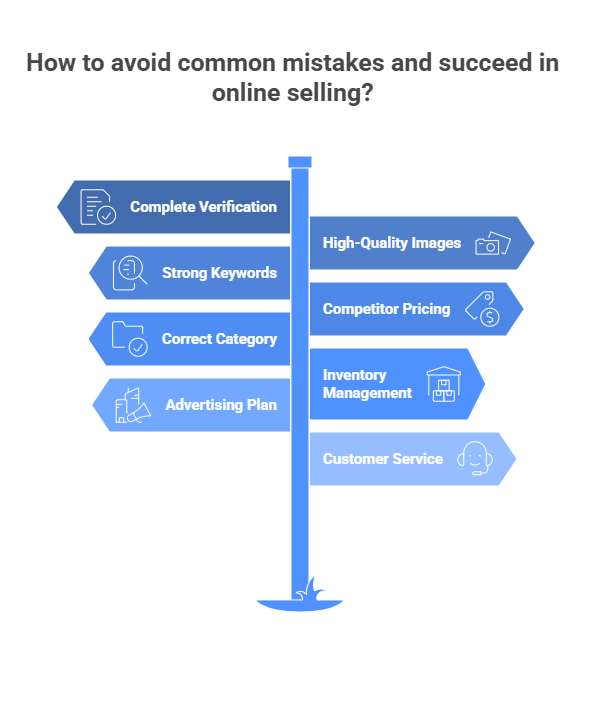
Consequently, preparation often matters more than speed.
When to Outsource Your Amazon Setup
Many internal teams face limitations in time, bandwidth, or deep marketplace expertise, which can make launching on Amazon more challenging than expected. As a result, brands often turn to specialists to ensure a smoother and more effective setup process.
Key reasons to outsource Amazon setup include the following:
- Limited internal time to manage end-to-end launch requirements
- Lack of in-depth Amazon marketplace expertise
- Need for proper handling of listings, approvals, and compliance
- Support required for structured early-stage growth execution
- Reducing costly setup and catalog errors
- Accelerating overall product launch timelines
- Improving early performance and visibility from day one
Professional support can reduce costly errors, shorten launch timelines, and improve first-month performance.
Why Brands Choose Professional Amazon Launch Support
Launching on Amazon involves multiple moving parts that directly impact long-term performance. Professional support helps ensure every step is executed correctly and efficiently, reducing friction and improving launch outcomes.
Key reasons brands choose expert launch support include:
- Coordinating account setup and verification processes
- Managing storefront creation and brand presentation
- Handling category approvals and compliance requirements
- Ensuring listing optimization is properly structured from the start
- Aligning operations for smoother fulfillment and readiness
- Reducing setup errors that can delay product launches
- Improving speed-to-market with a streamlined workflow
Whether launching a first product or expanding into a new marketplace, the right support can turn a complex setup into a faster, more profitable launch.
Looking for the right service partner? Contact Amazon Listing Service today to streamline your launch and set your Amazon store up for success.
Conclusion
A successful Amazon launch is not created by opening an account alone. It comes from combining the right setup, compliant documentation, optimized listings, category approvals, and operational readiness before the first customer arrives. Throughout this guide, we covered the essential services that help new sellers avoid delays, improve visibility, and build stronger early momentum.
The most successful brands treat launch as the first stage of long-term growth, not a one-time task. With expert support from Amazon Listing Service, businesses can simplify setup, reduce risk, and enter the marketplace with confidence and a stronger path to sales.
Frequently Asked Questions
1. What is included in an Amazon store launch service?
It often includes seller account setup, storefront creation, listing optimization, category approvals, fulfillment setup guidance, and launch readiness planning. Some providers also support advertising and post-launch growth.
2. Why would I outsource Amazon account setup?
Outsourcing can reduce setup errors, save time, and help navigate verification or compliance requirements more efficiently. It is useful for new sellers or brands entering unfamiliar marketplaces.
3. Do all Amazon categories require approval before launch?
No. Some categories are open, while others are restricted or require documentation. Requirements can vary by product type, brand, and marketplace.
4. How long does it take to launch an Amazon store?
Timelines vary based on account verification, product readiness, approvals, and fulfillment setup. Some launches move quickly, while others take longer if documentation or category approvals are needed.
5. What should I prepare before launching on Amazon?
Prepare business documents, product data, images, pricing strategy, inventory plans, fulfillment decisions, and customer service workflows. Strong preparation usually leads to a smoother launch.