


Last updated on December 5th, 2025
The pandemic shook economies and reshaped how success is measured. The traditional methods of business evaluation have become too narrow today. They do not capture the new realities of digital performance. The Amazon performance metrics that once reflected steady growth no longer suffice in a post-COVID marketplace.
Pre-COVID Amazon seller metrics relied heavily on predictable sales cycles, stable logistics, and routine buyer behavior. Now, the economic scene is much more dynamic. Consumers shop differently. Markets are evolving faster, and digital competition is growing sharper.
So, what’s next for sellers aiming to thrive in this new ecosystem? The answer lies in rethinking your Amazon KPI metrics. The need of the hour is to align them with today’s digital complexity.
This blog walks you through the key performance indicators that can help you evaluate your Amazon business more accurately. It can grow your business strategically in a changed world.
Table Of Contents
The Changing Landscape Of Amazon KPIs Post-COVID
Key Performance Indicators Of Amazon To Look For
FAQs
Conclusion
The Changing Landscape Of Amazon KPIs Post-COVID
Before 2020, tracking performance on Amazon seemed simple: monitor sales, maintain ratings, and optimize for the Buy Box. But post-pandemic, those measures are incomplete.
Now, Amazon KPI analysis must account for volatility. There are supply chain disruptions, fluctuating ad costs, inventory delays, and evolving buyer expectations. Sellers must adopt Amazon KPI metrics that offer clarity amid uncertainty.
The goal is no longer just “more sales.” It’s sustainable profitability with agility. Measuring your KPI for Amazon operations is now about how efficiently you adapt, not just how often you sell.
Key Performance Indicators Of Amazon To Look For
Every Amazon seller metric tells a part of your story. But collectively, they reveal how resilient your business truly is. Let’s explore the major Amazon performance metrics you should focus on.
Inventory
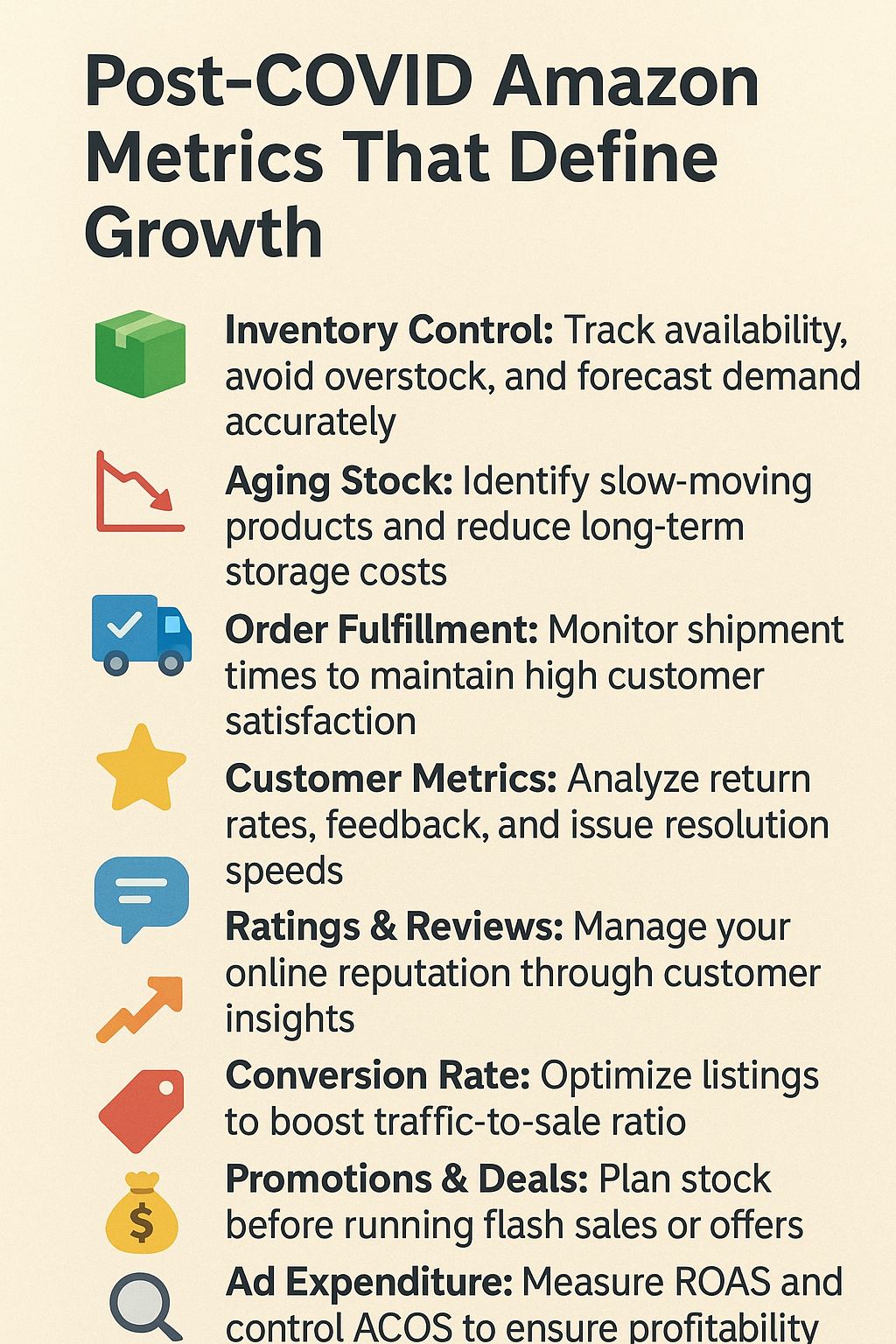
Your inventory is your heartbeat. Without careful tracking, even the strongest sellers collapse. Use predictive Amazon KPI analysis to forecast demand using historical data, seasonal patterns, and product trends.
Smart inventory management ensures your products are available when needed. The prevent any overstocking. Too little inventory, and you lose sales. Too much, and storage costs pile up. The goal is harmony, not chaos.

Aging Stock
Aging inventory eats into profits silently. It sits, stagnates, and drains cash flow. Monitoring this Amazon performance metric allows you to make smarter reorder decisions. They help you minimize long-term storage fees.
Rotate products strategically, bundle slow movers, or run clearance campaigns before they age further. Efficient Amazon seller metrics aren’t just about what sells. It is also about what still sits unsold.
Fulfilment of Orders & Shipments
Shipping delays are sales killers. If your order fulfillment timeline slips, your ranking does too. Track fulfillment metrics to balance costs with customer satisfaction.
Include your Amazon shipping costs, packaging, and logistics in your Amazon KPI metrics. Adjust pricing strategies accordingly so that your profitability remains consistent.
Customer Performance Metrics
Amazon values customer satisfaction more than anything else. Returns, refunds, and response times are among the most vital KPI for Amazon sellers.
Analyzing these Amazon seller metrics helps detect friction in the customer experience. Resolve complaints swiftly and keep your defect rate low—Amazon’s algorithm notices.
Reviews & Ratings
Your reviews are your reputation. In the eCommerce jungle, five stars aren’t just decorative; they’re survival.
Track your product reviews and ratings daily. Negative feedback can reduce your conversion rate and affect your organic ranking. Consider follow-up emails and active customer engagement to turn detractors into promoters.
This Amazon KPI analysis not only improves visibility but also creates and builds trust in your brand.

Conversion Rate
A high conversion rate signals relevance, clarity, and trust. Amazon ranks listings with better conversions higher than others because shoppers vote with their clicks.
Many sellers misunderstand this Amazon performance metric. Even if your daily sales stay steady, a competitor’s better conversion rate can push you down. Optimize images, rewrite copy, and test A+ content frequently.
Promotions
Sales and discounts can boost exposure, but they must align with inventory capacity. Running promotions without preparation can drain stock faster than planned, creating stockouts.
Use your Amazon seller metrics to forecast demand before launching deals. A well-timed campaign backed by enough inventory yields maximum profitability and ranking benefits.
Ad Expenditure
Advertising is essential, but uncontrolled ad spend can eat your margins alive. Review your ACOS (Advertising Cost of Sale) regularly.
A strong Amazon KPI analysis includes ROAS (Return on Ad Spend) and ad click-through rates. These metrics tell you whether your campaigns are driving meaningful conversions or simply draining resources.
Competitor Pricing
Your competitors aren’t sleeping. They watch your pricing and pounce when you slip.
Monitor competitor pricing patterns through Amazon performance metrics tools. A small price difference can change the Buy Box owner overnight. Staying alert ensures your profit margins remain intact while staying competitive.
FAQs
1. Why Are Amazon KPI Metrics Important Post-COVID?
They help sellers understand new buyer patterns, pricing shifts, and inventory behavior in a dynamic post-pandemic economy.
2. How Can Amazon KPI Analysis Improve My Business Decisions?
It identifies inefficiencies and opportunities, allowing you to adjust quickly and optimize profitability.
3. What Are The Most Critical Amazon Seller Metrics To Track?
Inventory turnover, conversion rate, customer satisfaction, ad performance, and competitor pricing.
4. Can KPI For Amazon Help Predict Future Trends?
Yes. When analyzed consistently, KPIs reveal demand trends, helping you plan promotions and inventory accurately.
5. How Often Should I Review My Amazon Performance Metrics?
Weekly for fast-moving products, and monthly for slow-moving ones. Consistency leads to foresight.
Conclusion
The pandemic has forever changed how success is measured. Relying on outdated metrics can cloud your judgment. By tracking precise Amazon KPI metrics, you can make informed decisions, optimize operations, and future-proof your business.
Amazon performance metrics are not just numbers—they’re signals guiding you toward efficiency and growth.
So, reimagine your analytics. Let Amazon KPI analysis be your compass in this fast-changing digital world. With the right insights, every metric turns into momentum.
Partner With Vserve Amazon Listing Services
Take the guesswork out of your Amazon growth strategy. With Vserve Amazon Listing Services, you gain data-backed insights, expert performance analysis, and tailored optimization to keep your store ahead of competitors.
Contact Vserve today to transform your Amazon KPIs.
Suggested Reads
- https://www.amazonlistingservice.com/blog/top-tools-for-amazon-listing-optimization-2025/ - Explore cutting-edge tools to optimize your Amazon listings efficiently.
- https://www.amazonlistingservice.com/blog/best-amazon-fba-products-may-2025-top-seller-picks/ - Find top-performing FBA products dominating Amazon in 2025.
- https://www.amazonlistingservice.com/blog/are-amazon-ai-listing-services-enough-for-competitive-niches/ - Discover whether AI listing tools can truly outperform human expertise.
- https://www.amazonlistingservice.com/blog/best-ai-tools-for-fba-sellers/ - Review top AI tools designed to help Amazon FBA sellers grow smarter.