


Last updated on September 2nd, 2026
Amazon account management is the ongoing oversight of an Amazon seller or vendor account to maintain operational performance, marketplace compliance, commercial efficiency, and sustainable growth. It involves coordinating the account's core activities and decisions across sales, catalog, inventory, advertising, pricing, account health, customer experience, and reporting rather than treating each function as a separate task.
For established sellers, manufacturers, distributors, and brands, Amazon requires continuous management because marketplace conditions change constantly. Inventory positions shift, competitors adjust pricing, advertising performance fluctuates, account-health issues can emerge, and product or customer data can become outdated, making periodic updates insufficient for businesses with significant Amazon revenue exposure.
Account management also extends well beyond listing optimization. While accurate titles, descriptions, attributes, images, and categorization remain important, effective management connects these elements with PPC performance, inventory planning, profitability, account health, competitive monitoring, operational execution, and business reporting.
This guide examines the Amazon account management services available to established businesses, including how the management process works, what it can cost, how often key activities should be performed, which KPIs matter, and what to evaluate when selecting a provider. It also covers where Amazon marketplace setup fits into the broader account lifecycle and what to ask an Amazon store management company before outsourcing critical marketplace operations.
Get Amazon experts for dedicated support across catalog, pricing, inventory, customer support, and marketplace operations.
Table of contents
How Amazon account management works
How Often Should an Amazon Account Be Managed?
Questions to Ask an Amazon Management Agency
How Amazon Account Management Works
A mature Amazon operation should follow a repeatable management cycle rather than rely on reactive problem-solving. Amazon Seller Central itself provides separate workspaces and reporting capabilities for account health, inventory, orders, advertising, customer communication, sales, and payments, making cross-functional management essential for organizations operating at scale.
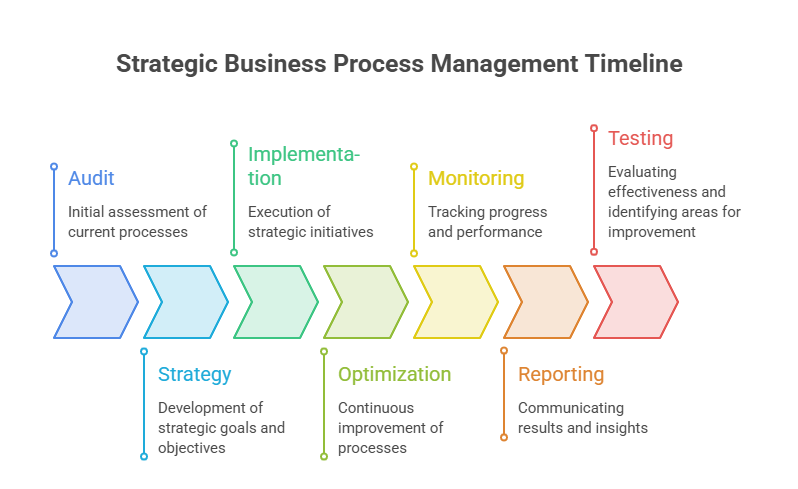
The objective is to turn marketplace data into operational decisions. Each stage feeds the next, creating a continuous management loop that allows leaders to identify performance gaps, implement corrective actions, measure results, and refine the operating strategy.
Step 1: Account audit
An account audit establishes the baseline before management priorities are defined. For enterprise sellers, the review should examine the relationship between commercial performance, operational execution, catalog quality, inventory availability, advertising efficiency, and account health.
The audit should cover:
- Catalog: SKU completeness, variation structures, titles, attributes, descriptions, categorization, content quality, and duplicate or suppressed listings.
- PPC: Campaign structure, search-term performance, advertising spend, conversion, ROAS, ACOS, TACOS, and wasted spend.
- Inventory: Stock availability, replenishment requirements, excess inventory, stranded inventory, sell-through, and weeks of cover. Amazon's FBA reporting includes specific views for restock inventory, stranded inventory, excess inventory, and inventory age.
- Account health: Policy compliance, customer-service performance, shipping performance, notifications, and unresolved account issues.
- Competitors: Pricing, assortment, content positioning, reviews, promotions, availability, and Featured Offer dynamics.
- Revenue and profitability: Sales, contribution margin, advertising costs, fulfillment expenses, returns, discounts, fees, and product-level profitability.
Step 2: Strategy development
The audit should translate into a prioritized operating strategy rather than a generic list of recommendations. Management teams should determine which products, channels, campaigns, operational risks, and profitability gaps deserve immediate attention.
Strategy should establish commercial objectives, inventory priorities, advertising parameters, catalog requirements, reporting standards, and escalation procedures. For manufacturers and distributors, this may also require alignment between Amazon demand and broader procurement, supply planning, and channel strategies.
Step 3: Account cleanup and optimization
Before increasing advertising spend or expanding assortment, structural problems should be corrected. Poor categorization, incomplete attributes, inaccurate pricing, suppressed listings, inconsistent product data, and weak variation structures can undermine performance even when traffic generation is strong.
Optimization should therefore address both customer-facing content and the underlying account structure. An effective Amazon account management services program treats catalog quality as an operational control point rather than an isolated SEO task.
Step 4: Ongoing execution
Once the account is stabilized, management shifts toward continuous execution. Activities may include listing updates, inventory coordination, campaign adjustments, pricing monitoring, promotional management, issue escalation, customer support coordination, and marketplace administration.
This is where internal teams often encounter capacity constraints. A dedicated management model allows operational work to continue consistently while senior leaders focus on assortment, sourcing, financial planning, product strategy, and broader channel growth.
Step 5: Monitoring and issue resolution
Marketplace performance can change quickly because inventory, advertising, pricing, customer feedback, policy requirements, and competitive conditions are interconnected. Monitoring should therefore identify exceptions before they become material revenue or account-health problems.
Amazon's Account Health dashboard provides visibility into customer-service and shipping performance as well as policy compliance, while Seller Central provides alerts and notifications that support ongoing account oversight.
Step 6: Reporting and optimization
Reporting should connect marketplace activity to business outcomes. Senior stakeholders need more than gross sales figures because revenue growth can conceal declining margins, inefficient advertising, inventory problems, or increasing operational costs.
A useful reporting framework can include sales, units, conversion, organic visibility, advertising efficiency, TACOS, contribution margin, inventory health, return rates, account-health status, and product-level profitability. Amazon's reporting infrastructure also allows sellers to examine sales, payments, inventory, returns, and other operational data within Seller Central.
How Often Should an Amazon Account Be Managed?
Management frequency should reflect the size, complexity, and risk profile of the marketplace operation. A high-volume manufacturer with thousands of SKUs and multiple fulfillment channels requires more frequent intervention than a smaller catalog with stable demand.
| Frequency | Typical activities |
| Daily | Sales, inventory, account health, and critical issue monitoring |
| Weekly | PPC, search terms, listings, reviews, competitors |
| Monthly | Catalog audits, profitability, inventory planning, reporting |
| Quarterly | Strategy review, full account audit, budget and growth planning |
Daily management is particularly important for exception monitoring, while weekly reviews are better suited to tactical optimization. Monthly and quarterly reviews should move progressively higher in scope, focusing on profitability, assortment, inventory strategy, resource allocation, and long-term growth.
Questions to Ask an Amazon Management Agency
Choosing a provider should be treated as an operational and financial decision rather than a simple outsourcing exercise. Enterprise buyers should evaluate whether the agency can integrate with existing commercial, supply chain, finance, and e-commerce processes.
What areas of the account will you manage?
Ask for a precise service scope covering catalog, advertising, inventory coordination, account health, pricing, customer support, reporting, and issue resolution. Avoid providers whose definition of account management is limited to listing updates or PPC execution.
How do you measure profitability?
A provider should explain how it distinguishes revenue growth from profitable growth. Ask whether reporting includes advertising costs, fulfillment expenses, returns, discounts, marketplace fees, and product-level contribution metrics.
How frequently will we receive reports?
Reporting frequency should correspond to operational risk and business volume. More importantly, determine whether reports explain what changed, why it changed, what action was taken, and what management decision is recommended next.
How do you handle account-health issues?
Account-health management requires defined escalation procedures and timely investigation. Ask who monitors policy notifications, performance metrics, customer-service issues, listing restrictions, and other risks, and how quickly critical issues are escalated.
Can you support complex catalogs?
Industrial distributors and manufacturers may have extensive catalogs with variations, technical attributes, multiple manufacturers, and complex taxonomy requirements. Confirm that the provider has processes for product-data standardization, categorization, bulk updates, and catalog governance.
How do you coordinate with internal teams?
The provider should be able to work with procurement, supply chain, finance, marketing, customer service, and operations teams. Clear ownership rules are especially important when marketplace decisions affect inventory commitments, pricing, or broader channel strategies.
Amazon Account Management Best Practices
Strong Amazon account management services should establish operating discipline around the data, processes, and decisions that influence marketplace profitability. The following practices help organizations move from reactive marketplace administration toward structured performance management.
Keep account data centralized
Centralized data reduces conflicting decisions across catalog, advertising, inventory, and finance teams. Establish consistent definitions for SKUs, product families, costs, pricing, inventory positions, and performance metrics.
Prioritize profitability, not revenue alone
Revenue is an important indicator, but it does not necessarily represent economic performance. Management should monitor contribution margin, advertising costs, fulfillment expenses, returns, discounts, fees, and other variable costs alongside sales.
Maintain catalog accuracy
Catalog errors can create downstream effects across discoverability, conversion, customer expectations, fulfillment, and reporting. Product titles, attributes, descriptions, categories, variations, images, and specifications should be governed as operational data.
Monitor inventory proactively
Inventory management should account for demand patterns, lead times, replenishment cycles, fulfillment constraints, and excess stock. Amazon provides inventory reports that can identify restock needs, stranded inventory, excess inventory, inventory age, and weeks of cover.
Separate branded and non-branded performance
Branded search and non-branded discovery can have materially different economics and strategic objectives. Separating the two helps management understand whether growth is coming from existing brand demand or incremental marketplace discovery.
Review PPC and organic performance together
Advertising and organic performance should not be evaluated as isolated channels. Changes in paid visibility, search-term performance, conversion, content quality, and organic ranking can influence one another, making integrated analysis more useful than campaign-level reporting alone.
Track account-health risks continuously
Account health should be managed as an operational risk category. Amazon's Account Health tools provide visibility into policy compliance and performance-related issues, making continuous monitoring preferable to waiting for a serious restriction or escalation.
Document changes
Every significant pricing, catalog, advertising, inventory, or account-health intervention should have an identifiable owner and rationale. Documentation creates accountability and makes it easier to determine which changes contributed to performance improvements or declines.
Use controlled automation
Automation can reduce repetitive workload, but it should operate within defined business rules. Pricing, advertising, inventory, and catalog automation should include thresholds, exception handling, approval requirements, and monitoring rather than operate without governance.
Review strategy quarterly
Quarterly reviews should challenge assumptions about assortment, pricing, advertising allocation, inventory, profitability, and growth. This prevents an account from becoming operationally efficient while gradually drifting away from broader business objectives.
Frequently Asked Questions
1. What is Amazon account management?
Amazon account management is the ongoing coordination of catalog, inventory, advertising, pricing, account health, customer experience, reporting, and marketplace operations. It focuses on maintaining performance while identifying opportunities to improve profitability, efficiency, compliance, and scalable growth.
2. What does an Amazon account manager do?
An Amazon account manager coordinates marketplace activities across sales, catalog, advertising, inventory, account health, customer issues, and reporting. Their role is to monitor performance, identify exceptions, coordinate corrective actions, and keep marketplace execution aligned with commercial objectives.
3. How much does Amazon account management cost?
Amazon account management costs vary according to catalog size, service scope, marketplace complexity, advertising requirements, and support coverage. Providers may use monthly retainers, percentage-based pricing, hourly models, or customized packages, so scope should be evaluated alongside price.
4. Is Amazon account management worth it?
Amazon account management can be valuable when marketplace complexity consumes internal resources or creates costly operational gaps. The business case should be evaluated against measurable improvements in profitability, productivity, inventory performance, account stability, advertising efficiency, and management capacity.
5. Can I manage my Amazon account myself?
Businesses can manage their own Amazon operations when they have sufficient internal expertise, systems, and capacity. However, larger catalogs, multiple fulfillment models, complex advertising programs, and significant revenue exposure can make dedicated operational management more practical.
6. When should I hire an Amazon account management agency?
An agency becomes worth evaluating when Amazon operations require more time, specialist knowledge, or cross-functional coordination than the internal team can consistently provide. Rapid catalog expansion, declining profitability, account-health risks, or international marketplace growth can also justify external support.
7. What services are included in Amazon account management?
Services commonly include catalog administration, listing optimization, inventory coordination, advertising support, pricing monitoring, account-health oversight, customer support, reporting, and issue resolution. The exact scope varies by provider, so buyers should establish responsibilities and deliverables before engagement.
8. How often should an Amazon seller account be audited?
A comprehensive account audit is typically appropriate at least quarterly, while high-volume or complex accounts may require more frequent reviews. Continuous monitoring should still occur between formal audits to identify inventory, advertising, catalog, compliance, and performance issues.
9. Can Amazon account management be automated?
Some Amazon account-management activities can be automated, including certain pricing, reporting, inventory, advertising, and catalog workflows. Automation should remain governed by business rules and human oversight because exceptions, policy changes, profitability constraints, and strategic decisions require contextual judgment.
10. What is the difference between Amazon account management and Amazon PPC management?
Amazon PPC management concentrates primarily on paid advertising campaigns, bids, keywords, budgets, and advertising efficiency. Amazon account management is broader, coordinating PPC with catalog, inventory, pricing, account health, customer experience, reporting, and overall marketplace performance.
Conclusion
Effective Amazon operations require continuous management across multiple interconnected functions rather than isolated listing or advertising tasks. For established sellers, manufacturers, distributors, and brands, Amazon account management services provide a structured framework for controlling marketplace execution while connecting operational activity to profitability and growth.
The strongest management model combines regular audits, disciplined execution, proactive inventory and account-health monitoring, integrated advertising analysis, accurate catalog governance, and executive-level reporting. Organizations that establish these processes can make Amazon a more measurable and scalable sales channel instead of treating it as a marketplace that requires constant reactive intervention.
For businesses evaluating an Amazon store management company, the right question is not simply how much the provider charges. The more important question is whether the provider can assume meaningful operational responsibility, improve measurable performance, coordinate with internal stakeholders, and create the management discipline required to scale Amazon sustainably.