


Last updated on June 8th, 2026
Selling on Amazon offers tremendous growth opportunities for businesses of all sizes. However, the marketplace is extremely competitive. According to Statista, Amazon accounted for 37.6% of total U.S. ecommerce sales in 2023, making it the largest online retailer in the country.
For business owners, this statistic underlines a key insight. Even great products can get lost among millions of listings if they are not optimized for Amazon search and conversion.
Many new sellers believe that simply listing a product is enough to generate sales. In reality, high-performing sellers leverage structured listing strategies, keyword optimization, and data-driven presentation. This is where partnering with a professional Amazon listing service or an Amazon listing service provider can make a tangible difference.

This guide will cover proven strategies for optimizing your Amazon listings. Implementing these tactics can help your products gain visibility, attract buyers, and improve conversion rates by up to 30 percent.
Table of Contents
Conduct Comprehensive Keyword Research
Write Persuasive Bullet Points
Use High-Quality Product Images
Optimize Backend Search Fields
Leverage Enhanced Brand Content
1. Why Optimized Listings Matter
Optimized listings do more than increase search visibility. They also directly impact how buyers perceive your product and whether they decide to purchase. Poorly structured listings often result in:
- Low search ranking
- High bounce rates
- Missed sales opportunities
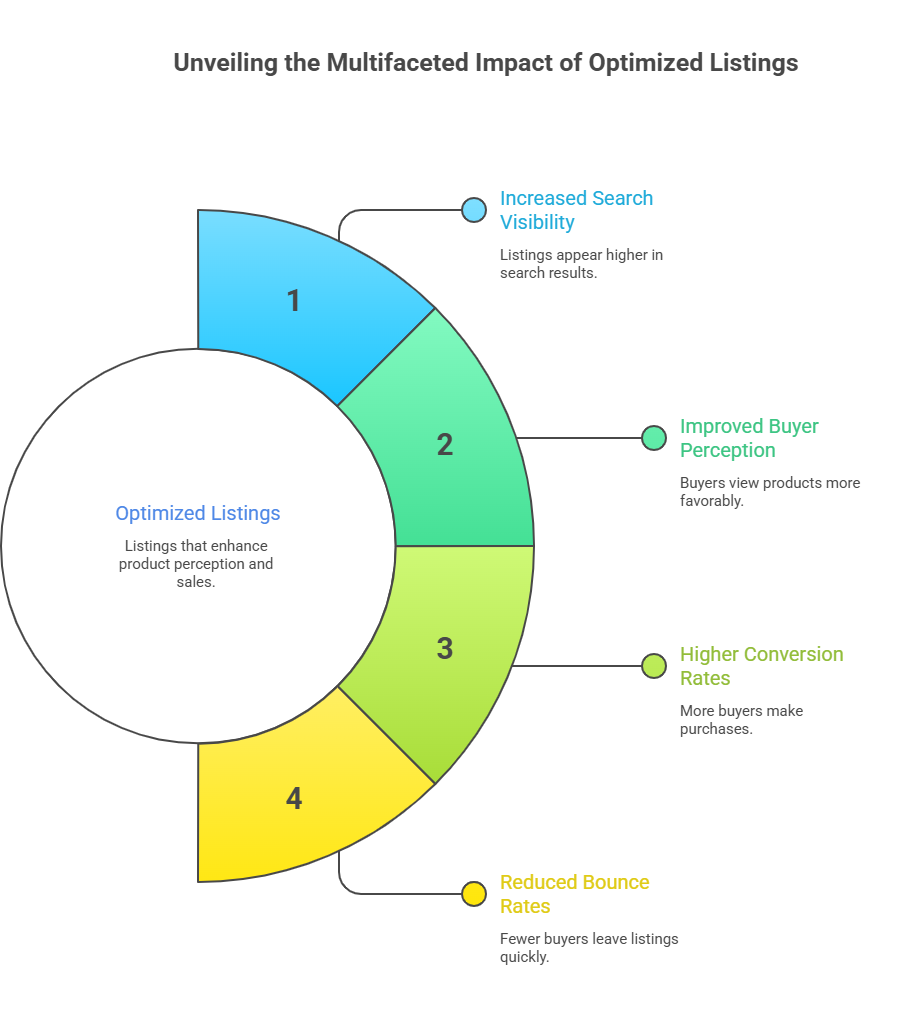
A professional Amazon listing service ensures that every element of your listing, from title to backend keywords, is designed to attract clicks and convert visitors into buyers. For business owners, this means more sales without necessarily increasing ad spend.
2. Conduct Comprehensive Keyword Research
Keyword research is the foundation of any high-performing Amazon listing. Amazon operates primarily as a search-driven marketplace, which means your products must match buyer search intent.

Key steps include:
- Identifying high-volume search terms
- Including long-tail keywords relevant to your product
- Analyzing competitor listings
- Tracking seasonal trends
An Amazon listing service provider often uses specialized tools to analyze keyword demand and competition. Proper keyword placement ensures that your listings show up for searches that actually drive conversions.
Apparel Brand Optimization
Consider an apparel brand selling a basic black hoodie. Without proper keyword research, the listing might only use a generic keyword like “black hoodie.” While this term has high search volume, it is also extremely competitive and does not capture the specific intent of many shoppers.
With comprehensive keyword research, the brand can uncover more targeted terms such as “men’s oversized black hoodie,” “women’s fleece hoodie,” “streetwear hoodie,” or “lightweight gym hoodie.” These long-tail keywords reflect how real customers search for apparel based on style, fit, and use case.

When these keywords are strategically placed in the product title, bullet points, and backend search fields, the hoodie can appear in a wider range of relevant searches. For example, a shopper searching for “oversized streetwear hoodie for men” may now discover the product even if they were not specifically searching for that brand. As a result, the apparel listing attracts more qualified traffic, improves click-through rates, and increases the likelihood of conversion.
3. Craft Titles That Convert
Your product title is one of the most critical elements of your listing. Amazon’s algorithm and your buyers both use the title to assess relevance.
Effective titles usually include:
- Primary keyword
- Core product features
- Variations such as size, color, or model
- Brand name, if applicable
For instance, instead of "Wireless Headphones," a more optimized title could be:
By working with a professional Amazon listing service, sellers ensure that titles are both search-friendly and compelling enough to encourage clicks.
4. Write Persuasive Bullet Points
Bullet points are where buyers decide if your product meets their needs. Optimized bullets focus on benefits rather than just features.
Key considerations include:
- Addressing customer pain points
- Highlighting unique product advantages
- Detailing ease of use or durability
- Including guarantees or warranties
For example, instead of “Made with stainless steel,” you could say:
A professional Amazon listing service helps craft persuasive copy that communicates value and builds buyer confidence.
5. Use High-Quality Product Images
Visuals are essential for driving conversions. Buyers cannot touch or feel the product, so images must clearly communicate quality and functionality.
Effective images include:
- Clear main product image on white background
- Lifestyle images showing real-world use
- Close-ups of key features
- Infographics highlighting product benefits
- Size comparison images
Working with a professional Amazon listing service or Amazon product listing company ensures images meet Amazon standards while effectively showcasing the product.
Consider an electronics brand selling wireless noise-canceling headphones. If the listing only includes a single product image on a white background, customers may struggle to understand the product’s features or real-world benefits.
With a well-optimized visual strategy, the brand can include multiple types of images that guide the buyer through the product’s value. For example, a lifestyle image might show a commuter wearing the headphones on a train, illustrating portability and comfort. A close-up image can highlight the control buttons and premium ear cushion materials. Infographic-style images can visually explain features such as battery life, Bluetooth range, and active noise cancellation. A comparison image may also show how compact the headphones are when folded for travel.
When these visuals clearly communicate the product’s functionality and benefits, shoppers can make faster and more confident buying decisions. As a result, the electronics brand can improve click-through rates, increase customer trust, and achieve higher conversion rates on its Amazon listing.
6. Optimize Backend Search Fields
Many sellers overlook backend search fields, yet they can significantly influence ranking. Backend keywords allow Amazon to index your product for terms not visible in the public listing.
Best practices:
- Include alternate product names
- Add common misspellings or regional terms
- Include related phrases
- Avoid keyword stuffing
An Amazon listing optimization agency audits these fields to improve discoverability without violating Amazon policies.
Consider a furniture brand selling a compact wooden desk designed for small spaces. The public listing may focus on primary keywords such as “small wooden desk,” “home office desk,” or “compact writing desk.” However, many shoppers might search using different variations that cannot all fit naturally in the visible listing.
By optimizing backend search fields, the brand can include additional relevant terms such as “apartment desk,” “study table,” “small workstation,” “dorm desk,” or “wood computer desk.” These variations help Amazon understand that the product is relevant to multiple types of searches related to small-space furniture.
For example, a student searching for “dorm room desk” or a remote worker looking for a “small apartment workstation” may now find the product even if those exact phrases do not appear in the main listing. This broader keyword coverage increases the chances of appearing in more search results, helping the furniture brand attract additional qualified traffic and improve overall sales performance.
7. Leverage Enhanced Brand Content
A Plus or Enhanced Brand Content allows sellers to tell a more compelling story about their brand and products. Benefits include:
- Detailed feature explanations
- Comparison charts
- Lifestyle imagery and infographics
Brands using Enhanced Content often see higher engagement and improved conversion rates. An Amazon listing optimization services provider can design layouts that combine storytelling and visual design to highlight product value.
Consider a real estate brand selling smart home devices designed specifically for property owners and real estate professionals, such as smart locks or home security cameras. A standard product description may only list basic specifications like battery life, installation method, or connectivity features.
With Enhanced Brand Content, the brand can create a more compelling presentation that connects the product to real estate use cases. For example, a lifestyle image could show a property manager remotely unlocking a rental unit for a viewing. An infographic might explain how the smart lock improves property access management for landlords or short-term rental hosts. A comparison chart could highlight differences between models designed for apartments, rental homes, or office spaces.
By presenting the product within a real-world property management context, the listing becomes more relevant to real estate professionals and homeowners. This approach helps shoppers quickly understand how the product solves their problems, which increases trust, improves engagement, and ultimately drives higher conversion rates.
8. Monitor Performance and Adjust Continuously
Amazon listings are never static. Successful sellers regularly monitor metrics such as:
- Click-through rates
- Conversion rates
- Keyword rankings
- Customer feedback
- Advertising performance
A reliable Amazon VA agency can manage ongoing optimization, freeing business owners to focus on growth strategies. Continuous improvements help listings stay competitive as market trends evolve.
Conclusion
Optimized Amazon listings are essential for driving traffic and improving conversion rates. From keyword research to persuasive copy, high-quality images, and ongoing performance monitoring, every element plays a role in turning browsers into buyers.
For business owners, leveraging an Amazon product listing service, professional Amazon listing service, or Amazon listing service provider can save time while ensuring listings are optimized for maximum performance. By applying these strategies, sellers can achieve measurable results, including up to 30 percent higher conversions.
With the right approach, Amazon listings become more than a product page, they become a strategic sales tool.
FAQs
1. What are amazon listing services?
Amazon listing services help businesses create, optimize, and manage product listings to improve visibility, engagement, and sales.
2. Do I need an amazon product listing company?
Working with a professional company ensures listings are optimized for keywords, images, and conversions, which can improve sales performance.
3. What does an amazon listing service provider do?
They handle listing creation, keyword research, product optimization, backend search terms, and sometimes enhanced content development.
4. How much does a professional amazon listing service cost?
Pricing varies based on the number of listings and level of optimization, but services often provide a return through increased sales and visibility.
5. Can optimized listings really improve conversion rates?
Yes. Optimized titles, images, bullet points, and backend keywords help listings appear in more searches and convert visitors into buyers.