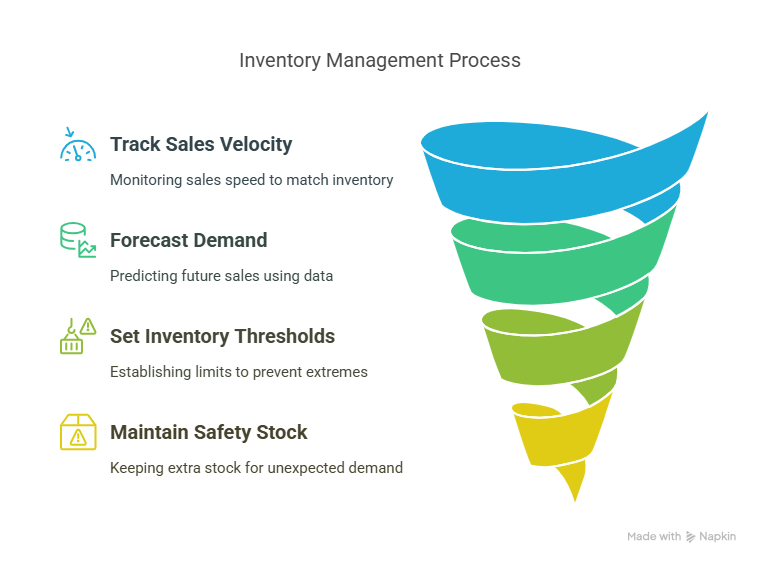

The above question might have struck your mind several times if you are an Amazon seller. Effectively Amazon stock management and learning how to manage inventory Amazon are essential parts of becoming a successful seller. By working your list, you can easily avoid significant profit killers, accruing high storage costs because of overstocking, and losing sales as the products go out of stock. Inventory control and broader inventory operations are widely acknowledged as key business functions that help ensure the right level of stock is available at the right time to meet customer demand and avoid extra cost.
The management of inventories has emerged as the primary differentiator between successful and unsuccessful retail operations. It is essential to have proper Amazon seller inventory management to reduce unnecessary costs and streamline your business process. Strong Amazon stock control ensures you are always aware of inventory levels, helping prevent both shortages and overstocking.
Table of Contents
What is Inventory Management? Why do Amazon Sellers Need Inventory Management? Planning for Inventory Distribute Inventory Managing Supplies and Inventory Sourcing Keeping Track of Inventory Stock of Perishable Items Wrapping Up FAQ
What is Inventory Management?
Inventory is the number of products a business holds to sell in the marketplace. eCommerce inventory management is the process of storing and tracking these products to meet customer demand efficiently. It also includes strategies a business implements to source, process, and store products to prepare them for sale. Poor eCommerce inventory management may result in a loss of profits due to a shortage of products or the higher cost of storing overstocked products. Effective Amazon stock management helps businesses prevent these issues. However, the results of poor management may not be visible for a few weeks. But things may go out of control when it becomes apparent. Sellers may experience unfulfilled orders, and products may stay out of stock and lose sales, dead stock, spoiled products, or too high storage costs. Successful eCommerce inventory management is finding the perfect balance between overstocking and shortage. Using the right strategy for your inventory, including proper Amazon seller inventory management, you can quickly determine how often your list needs restocking to maintain optimal levels.Why do Amazon Sellers Need Inventory Management?
In this competitive world, customers don't wait for a product to come back in stock. Instead, they immediately start looking for alternatives if they find a product out of stock. As per statistics from JungleScout, 68% of Amazon customers from the United States expect their products to get delivered within the first three days of placing the order. Moreover, almost 50% of them are ready to pay more for faster delivery, and 70% will be upset if their product is not delivered on time. If the product continuously goes out of delivery, customers will start looking for products from competitors. This way, sellers will lose not only sales but also organic traffic. With more customers preferring other products over yours, your listing's organic ranking will drop gradually. Here are four reasons why Amazon sellers need to take control of their inventory:- Attracting more sales: If the product listing constantly shows out of stock, the potential customer will prefer buying from the competitors, and you will keep losing profit as an Amazon seller. Proper Amazon stock control prevents this issue.
- Reducing inventory cost: When the inventory is not managed correctly, it may have too much inventory, and sellers may have to spend more money to store unsold products.
- Reducing inventory loss: With proper eCommerce Amazon seller inventory management, sellers can reduce losses from inventory mismanagement, damages, spoils, and errors.
- Reducing product spoilage: If you are selling perishable products, an effective inventory management strategy can help track the sell-by and expiry date of products to avoid spoilage and reduce unsellable products.
Planning for Inventory
It is generally a good idea to coordinate the supply of your items with the typical demand for them to design your inventory more effectively. The gauging and planning should be done point-by-point to make this possible. To put it another way, you need to ensure that you are not sourcing excessively many or inadequate quantities of the items. Amazon provides a variety of reports that you can use to improve how you organize your inventory. Proper planning supports effective Amazon seller inventory management. For example, the Amazon Selling Coach can provide assistance in distinguishing inventory openings in light of your deals and the information regarding your current inventory. It provides individualized recommendations for streamlining your stock levels. On the page where you oversee inventory, you can also view the details of your postings and the status of those postings. You are prompted on this page to address inactive or out-of-stock postings so that you can evaluate the quality of your inventory and determine ways to improve it. Amazon sellers who provide faster delivery of products usually experience higher conversion rates. With such a massive demand for products, it is ideal for the sellers to maintain an inventory of four weeks as it will provide sellers with enough time to manage inventory Amazon efficiently.Distribute Inventory
- Maintain timely delivery records to provide better customer satisfaction
- Reduce stock shortage and lost sales through strong Amazon stock control
- Avoid overstocking of products to save on storage cost