
Amazon Product Taxonomy Archives - Amazon Listing Service

Category: Amazon Product Taxonomy

4 Impressive Ways to Build Effective Product Taxonomies

Product Taxonomy 101

Taxonomy is a way to organize information into categories or groups. In other words, it helps us classify things. For example, let's say you want to sell shoes. If you don't have enough shoe types, you might create a category called "shoes" and then subcategories such as "dress shoes," "casual shoes," etc. This makes it easier for customers to browse through your store. A well-structured product taxonomy framework helps organize digital catalogs and improves navigation for customers.

Ecommerce sites often struggle with creating effective product taxonomies. They tend to focus too much on keywords and miss out on essential aspects of their site. By focusing on the customer experience, they can build better taxonomies and create a stronger eCommerce product taxonomy that improves product discovery. The importance of organizing digital information into structured categories is also discussed in records management guidance published by the U.S. National Archives and Records Administration.

Table of Contents

How to Design a Product Taxonomy

Tactic 1: Create the Portfolio

Tactics 2 and 3: Develop a Product Taxonomy and Technologies to Products Map

How To Form a Product Taxonomy

Authentic Product Taxonomy

Tactic 4: Map The People to the Products

Conclusion

FAQ

Build Effective Product Taxonomies

How to Design a Product Taxonomy?

Emerging best practices for creating a product taxonomy development include the ones listed below. This advice is based on the expertise of numerous businesses that have successfully transformed various industries. All the companies we researched and interviewed and where we found these practices were either scaling up or optimizing their product transformations.

These strategies are designed to offer direction and make suggestions for methods, equipment, and methods of construction of conversations that will lead the organization to a product-centric operating model supported by a structured product management taxonomy. There are numerous ways to have these conversations; these steps are neither a precise framework nor linear or all-inclusive. Recognize that every business is at a different stage of its transformational journey toward becoming more product-centric, Agile-minded, and customer-obsessed.

Here are the strategies we recommend. Below, we'll go into each process in more detail.

Tactic 1: Create the Portfolio

A common goal and vision serve as the north star, fostering interpersonal and emotional ties between leaders and teams. This serves as our inspiration to keep going in the face of hardship. This can be used as a reference to confirm that the actions we are taking are in line with our goals.

Who Should Be Involved?

Leaders in business and technology for the portfolio. It is advised that business and technology leaders get together early to map a product-centric operating model and align their objectives. Before working with the teams, establish shared understanding and alignment among the leaders. Obtain feedback from the groups, then make necessary adjustments. What strikes a chord with them? What fails? Avoid using too many corporate buzzwords that depersonalize the vision; use straightforward, approachable language to make the north star relatable.

Principal Questions And Thoughts

  • What is the goal here?
  • Where are we trying to go?What will the architecture of the future look like?
  • What results are we aiming for?
  • What will success look like for our product portfolio in a year?
  • What hurts right now?

Suggestive Methods And Activities

  • Product and portfolio community map (a Venn diagram map displaying product dependencies, customers, and stakeholders)
  • Personas or customer descriptions (who are they, what do we know about them, their problems and joys, how can we help them, what assumptions are we making, and how can we help them)
  • Outlook or a roadmap with results
  • product naming (what, why, who)
  • Objects and essential outcomes (OKRs)

Tactics 2 And 3: Develop a Product Taxonomy And a Technologies to Products Map

Ideal starting point for this discussion is value stream mapping, also known as experience mapping. The best way to determine which products belong in a portfolio is to visualize the entire customer experience (from idea to revenue or from product creation to customer delivery).

If you can, bring in a coach or facilitator to keep the discussion on track and impartial. When ownership disputes or redundant capabilities first surface, which can happen frequently, a neutral facilitator can help move collaboration forward effectively.

Utilizing current service catalogs, configuration management databases, or business capability frameworks as appropriate ways to begin the product taxonomy development definition are some other approaches. Finding a natural place to start the discussion about product taxonomy definitions is crucial when building a scalable product taxonomy framework.

Who Should Participate?

leaders in business and technology for the portfolio

Principal Questions And Thoughts

  • Why is your team or space there?
  • What customer experience or capability are you enabling or delivering?
  • Just who are your clients?
  • Why do customers seek assistance from your team? What issues do you address?
  • What are the technologies or applications that provide or support that customer experience?
  • What applications does your team have overall responsibility for?

The applications' purpose is to: Do they all provide the same experience, or is there room for application consolidation, sunsetting, or realignment to a different team? What issues with customers do they resolve? For how long have they been around?

Suggestive Methods And Activities

  • Value stream diagram (on a whiteboard, collaboratively, face to face if possible)
  • Integration of value streams (implementation of the mapping exercise)
  • a community for products map (Venn diagram map displaying product dependencies, customers, and stakeholders)
  • client definition (personas)
  • Taxonomy of products document

There are a few recommended methods for creating your product taxonomy. Additional layers can be added below the value stream once the value stream map has been made to identify product groups, products, and applications. This layered structure is a key component of an effective ecommerce product taxonomy.

How To Form a Product Taxonomy

  • When naming your products, use language appropriate for business. Avoid using ambiguous names or acronyms. Your product taxonomy development should be simple enough for anyone to read and comprehend the product's experience.
  • Ensure each product has a customer specified and that both internal and external consequences have been defined.
  • Instead of focusing on the application used to deliver it, pay attention to the business and customer outcome, capability, or experience that the product has. This approach is commonly used in structured product management taxonomy models.
  • Remember that while products will likely remain consistent over time, technologies and applications constantly evolve as new solutions are adopted.
  • When the application becomes the main focus, using the "5 Whys" technique can help ensure the source of the experience is discovered.
  • Get opinions from your coworkers, coaches, team, and business partners.
  • Be prepared for a bumpy path. Choose a starting point, then carry it out. Learn from the product taxonomy's initial iteration and feel free to tweak it quarterly or annually as necessary.

Authentic Product Taxonomy

The product taxonomy development ought to be a transparent artifact shared by all product portfolios. To guarantee the data's consistency and security, a centralized team should maintain the artifact. Publish taxonomy updates on a quarterly or biannual basis. The table that follows provides a sample product taxonomy that fits within a structured product taxonomy framework.

Tactic 4: Map The People to the Products

The organization will be redesigned around the products using a clear product taxonomy development as a guide. Organizing teams to own the products from start to finish is a fundamental change when switching to a product-centric operating model. In a conventional project model, the units are assembled briefly to carry out particular project objectives before being dispersed, leaving no formal owners for anything produced during the project. Ownership, accountability, and empowerment are at the core of the product model.

Teams should be cross-functional, small (between five and ten people), and have the necessary skills to plan, design, build, and operate the product. Think about how many product teams will be required to support a development. Although there should ideally be one product for every team, a product can be supported by multiple teams.

Conclusion

Users will have a more enjoyable experience browsing a website and its pages if the product taxonomy is correct and accurate. It will be simpler for customers to purchase from the website if they can easily see the products. Implementing a structured ecommerce product taxonomy supported by a scalable product taxonomy framework improves navigation, product discovery, and conversions.

At Vserve Amazon Listing Service, we take care to place each of your products in the appropriate categories through strategic product taxonomy development and effective product management taxonomy practices. You will find it simpler to boost sales as a result.

FAQ

1. What is a product taxonomy framework?

A product taxonomy framework is a structured system used to organize products into categories and subcategories so users and internal teams can easily manage and navigate product catalogs.

2. Why is ecommerce product taxonomy important?

An ecommerce product taxonomy improves product discoverability, filtering, and navigation, making it easier for customers to find and purchase items.

3. What is product taxonomy development?

Product taxonomy development is the process of designing and structuring product categories, attributes, and relationships within a catalog.

4. How does product management taxonomy help organizations?

A product management taxonomy helps organizations structure product portfolios, improve internal product governance, and streamline product lifecycle management.
How to Develop a Custom Product Taxonomy with the Help of the Experts?

How To Develop A Custom Product Taxonomy

Are you looking for ways to improve your product taxonomy development skills? Or maybe you want to develop a custom taxonomy for your eCommerce store? In either case, you should consider using product taxonomy development services from experts who specialize in creating custom taxonomies for online stores and digital marketplaces. Proper classification systems also align with structured data and web organization standards such as those discussed by the World Wide Web Consortium (W3C), which helps improve how online information is structured and understood across the web.

Table of Contents

What is Product Taxonomy?

How Product Taxonomy Boosts Sales

Top Tips for Maximizing Product Taxonomy and Categorization

How Experts Help Develop Product Taxonomy

Final Thoughts

FAQ

What is Product Taxonomy?

Product taxonomy refers to the classification system or hierarchy of terms used to describe something. For example, let's say you sell clothing items. Your customers might classify these clothes as men's shirts, women's dresses, etc. The same applies to eCommerce stores. They typically categorize their products into specific groups (e.g., shoes, bags, watches), allowing shoppers to browse through them quickly. This structured approach forms the foundation of a well-designed ecommerce product taxonomy that improves both navigation and product discovery.

You should hire a professional to build a custom product taxonomy for you for several reasons:

  1. They usually offer better quality at a lower price point.
  2. They're able to provide support 24/7.
  3. They're experienced in building complex taxonomies.
  4. They can also optimize your taxonomy for SEO purposes and integrate it with broader product management taxonomy strategies.

Product Taxonomy

How Can Product Taxonomy Boost Sales?

1. Enhanced User Experience through On-Page Features and Intuitive Navigation

The organization impacts the user interface and user experience of your site. Where your products should live should be one of your first considerations when performing product taxonomy development.

The key is to strike a balance between the rational connections between your products and the irrational tendencies of customers, which frequently but not always coincide. Keep it conventional enough that they won't leave because they're confused but sensible enough that once they do, the experience will be as practical as possible.

2. Clarify and Define the Team's Product "Owners"

The knowledge you have about your products as a store owner is superior to everyone else's, but it needs to leave your head and be shared with your team and clients.

Start by selecting a few of your best products, which can include top sellers or things you want to be top sellers, depending on the size of your catalog. These internal structures often form the backbone of an effective product management taxonomy that aligns teams, product data, and digital storefronts.

3. Be Search Engine Friendly

The significance of product taxonomy concerning product recommendations on internal searches has already been discussed. However, if an excessive number of results are returned, you might as well start over. Every search engine results page (SERP) requires facets and differentiating characteristics that let you focus on your results.

External searches can benefit from product taxonomy development as well. Structured data is best for crawlers, and a clear organization with hierarchy and distinctions called out is a clear signal to Google about where to find your content.

Product taxonomies ensure that the right products are promoted in searches and power the facets and filters on your search engine results pages, which is a core component of a scalable ecommerce product taxonomy strategy.

Top Tips For Maximizing Your Product Taxonomy and Categorization

A genuinely effective product taxonomy development will also take your customers' needs into account.

Some instances:

  • Indicate which brands the repair part is compatible with if you sell replacement parts.
  • Call out potential allergens in a health-conscious grocery store so customers can choose what they want to avoid.
  • Is size significant, or is it only necessary for specific products?
  • Should the title mention color, or is it a common distinction that suggests a parent-child relationship rather than a "flat" catalog?

Execute this exercise across the entire catalog, depending on your time or resources. If you're on a tight budget, select a representative sample because it will quickly reveal crucial information about your products. Below is a list of additional best practices for product taxonomy development and categorization.

1. Avoid "over-categorizing"

Use a tool to visualize the taxonomy, such as software like Lucidchart or drawing the tree on a whiteboard. It's time to refresh if you feel overawed by the number of categories or if your tree resembles a small shrub.

Additionally, you'll be able to quickly spot things like "potpourri," which is a collection of unrelated products or duplicate categories. Making a product taxonomy exercise could have the unintended result of making you overly organized. You have too many levels and subcategories if a website visitor spends more time navigating than actually looking at the products.

According to Elyse Smith, Project Manager at DigitlHaus, the best advice is to keep things straightforward. "When it comes to product details, organization, and structure, this is crucial.

Keep your depth hierarchy to two or three categories (2 preferred). The bounce rate will be lower with fewer clicks. Use faceted search and filtering if you have an extensive catalog. And for the love of all that is good, don't add the category "Other" to the list.

Nobody searches for the Other. Be smart and let your categories be necessary and to the point."

2. Define Attributes of Subcategories

Make sure your category tree moves from the general to the specifications according to a clear hierarchy. If "Shirts" is your parent category, don't put "Women's" below it. Put "Shirts," "T-Shirts," and "Long Sleeve Shirts" instead. If we compare your website to a brick-and-mortar store, your parent category is the aisle, your child category is the shelf, and your website is the product.

3. Make Sure to Classify Things Correctly to Prevent Confusion

Keep as many categories distinct as you can. Consider opportunities to combine classes or whether this repeated category is better understood as an attribute that leads to a search facet if you discover the same category names are repeated repeatedly in every branch.

4. Use Proper Names and Take into Account Searching for Synonyms

When naming your categories, keep your audience in mind and draw from your experience. It's crucial to use terms that people in the industry understand if you run a B2B site with a particular audience.

A hyper-specific classification that only your Italian fashion buyers would understand is all but useless if it is a general audience B2C retail site. However, you ensure that both specialized and general audiences can find what they're looking for by adding that industry jargon as a search synonym for the category.

How will an Expert Like Vserve Amazon Listing Service Help Develop Product Taxonomy?

Finding the Right Balance - Vserve Amazon Listing Services will ensure the product taxonomy development has the right amount of information distributed among each category and subcategory and the right balance of products.

Customer-Driven Categorization - Experts will let your customers determine the complexity and language of the product taxonomy structure. Vserve will build the design based on your audience's vocabulary and key terms.

SEO-Friendly Categorization - The product categories we establish are enhanced with relevant keywords for SEO purposes to improve page ranking, strengthening your ecommerce product taxonomy structure.

Definition of Attributes - Each product page includes a list of all the characteristics and values that define the item to aid customers in making an informed choice.

Data normalization - To deliver a consistent and comprehensive data set, our expert team will validate your product data, eliminate duplicates, and standardize the values and units of measurement.

Ongoing Modification Support - If necessary, our product taxonomy development services can go beyond the initial product taxonomy development for a given product. We can offer ongoing support when new products and categories are added to your catalog.

Final Thoughts

Vserve, a company with ten years of experience in the eCommerce sector, can create a strong and highly effective eCommerce product taxonomy for your Amazon store. We can get started on the in-depth analysis of your current product data with some information about your products. We can present the product categorization tactics that improve the functionality and sales of your Amazon store.

Are you just getting started with your Amazon business? Don't worry; we can also create a brand-new product management taxonomy for you. Every specific business need can be met and catered to by our professionals, who are authorities in all facets of Amazon listing services and product taxonomy development services.

FAQ

1. What is product taxonomy development?

Product taxonomy development is the process of organizing products into structured categories and hierarchies so customers and search engines can easily find and understand them.

2. Why is ecommerce product taxonomy important?

An effective ecommerce product taxonomy improves navigation, search filtering, SEO performance, and overall customer experience in an online store.

3. What are product taxonomy development services?

Product taxonomy development services help businesses design, structure, and maintain product category hierarchies to improve product discovery, data management, and online store performance.

4. What is product management taxonomy?

product management taxonomy organizes product data, attributes, and relationships across systems so teams can manage catalogs, inventory, and product information efficiently.

6 Types of Amazon Image Processing Services and Its Advantages

6 Types Of Amazon Image Processing Services And Its Advantages

As we all know, pictures speak louder than words, and if you can increase the quality of your images, you will most certainly fascinate your audience. As a result, you should proceed with caution when processing the photos.

Amazon is one of several firms that offer image processing services. These services allow you to create image analyses for your apps rapidly. Let’s dive into different types of amazon image processing services as well as the advantages you can enjoy upon getting the service.

Table of Contents

Amazon Image Processing Classifications

Amazon Photo Processing Steps You Need to Know

6 Types of Amazon Image Processing Services

Advantages of Getting Amazon Photo Processing Services

Amazon Listing Images & Image Processing Services for eCommerce

Conclusion

Frequently Asked Questions (FAQ)

Amazon Image Processing Classifications

Image processing in AWS is classified into five major types.

  • Visualization: Looking for objects that are not visible in the image.
  • Recognition: Distinguishing or detecting objects in a particular image.
  • Restoration and Sharpening: Creating an enhanced image from the original low-quality one.
  • Pattern Recognition: Measuring different patterns of the things in the image.
  • Retrieval: Searching and browsing other pictures from the vast database of digital images similar to the original image.

Amazon Photo Processing Steps You Need to Know

Upon getting the photo processing services, you might be wondering how their process works and what are the things they do to make the images fascinating. Below here are the steps that Amazon and other image processing service providers follow to process an image:

Acquiring the Image

Picture capture is the initial stage in image processing. The procedure also includes image processing and pre-processing. In this stage, the image processing system typically obtains an image from a hardware-based source.

Enhancement of the Images

This step involves highlighting and bringing out certain valuable features of the obscured image. The image highlighting includes steps like changing contrast, brightness, saturation, etc.

Image Restoration Process

The procedure to improve the appearance of the picture is called image restoration. However, it is not similar to image enhancement, as it involves steps like restoring the image by using specific probabilistic or mathematical models.

Color Image Processing

This step includes several color modeling techniques within a digital domain. Color image processing has become popular because of the high use of digital images on the internet.

Multiresolution and Wavelets Processing

Wavelets are used to represent pictures in several resolution degrees. The images are divided into these wavelets or even smaller regions to compress data or represent pyramidically.

Compression of Images

It is a process that reduces the storage required to save a picture or the bandwidth needed for transmission. This is mainly done when you need an image to be used over the internet.

Morphological Processing

This image processing step is a method of processing operations to morph pictures based on their shape.

Image Segmentation

One of the most complicated steps of photo processing online is segmentation. This step includes partitioning a picture into its constituent objects or parts.

Image Description and Representation

When the image is eventually partitioned into areas after the segmentation stage, each region is characterized and represented suitably for further processing by the computer. The region representation is concerned with the image's geographical qualities and attributes. On the other hand, the description deals with the extraction of quantitative information that aids in the distinction of one thing from another.

Photo Recognition

Recognition involves assigning a specific label to the object based on its description.

6 Types of Amazon Image Processing Services

Amazon utilizes the entire kit of state-of-the-art software and bespoke techniques to deliver image processing outcomes that reflect today's in-demand and most popular imaging applications. These amazon image processing services include, but are not limited to:

Photo Scanning and Database Entry

Amazon image processing takes the already-existing physical photos and digital images to create organized and retrievable databases for industries and businesses that need a convenient and classified compilation and storage of a vast quantity of photos. The scanning process is used to convert the images safely into a digital system for sharing, archiving, storing, and uploading.

Image Cropping and Scaling

AWS image processing services remove the tendency of picture distortion during the cropping and scaling process with detailed attention and manipulation of the pixel number and size. These steps result in brilliantly resized and attractive photos that do not contain any unwanted blurriness, warping, or texture changes.

Image Manipulation

Amazon image processing services tastefully and skillfully manipulate images to produce the desired outcome required by the client. These amazon image processing options extend to double exposure, airbrushing, hand coloring, retouching, restoration, etc. A highly sought-after solution for social media content, fashion, and eCommerce applications, the image results of photo processing online is limited only by the imagination.

3D Image Processing

Amazon image processing services include processing pictures designed to depict any representation or object in 3D. This is a popular image processing service in AWS among the real-estate, medical, and gaming industries. Several options are available, including scaling, adjustments, color corrections, formatting, and contrast enhancement. The Amazon image processing services also address optical misalignments and apply special effects.

Image Color Correction

Image processing in AWS also includes retouching and correction of the colors of the photos, with an artist's eye for tonal values, light sources, shading, and palette. It also offers customized options for events, portraits, products, landscapes, jewelry, automotive, fashion, real estate, etc.

Image Conversion

Amazon Image Processing integrates and transforms image data to your desired format, which includes options like PNG, TIFF, JPEG, PDF, GIF, and PSD. There is absolutely no loss of the image details or integrity during re-sampling or compressing the pictures, resulting in flawless products that go well with your intended application.

Advantages of Getting Amazon Photo Processing Services

When it comes to image processing, Amazon handles various tasks such as resizing, photo restoration, raw processing, image enhancement, and so on. After the modification is completed, the Amazon Graphic designer will review the picture to ensure it fits the intended purpose.

When you decide to outsource your images to Amazon image processing, you can expect a great deal of manual refinery and intelligent automation from Amazon's skilled technicians. In addition, here are some other benefits you can enjoy:

Refined Image Manipulation

Sophisticated image results address high-quality visual effects, including transformations, intensity, feature or texture matching, color image processing, extraction, and image segmentation.

Increases Storage and Transmission Expedience

The practicality of digital storage increases, along with the transmission of photos with fast and safe image compression, which reduces redundancies in image representation and resolution.

Image Security and Discretion

You can be stress-free because Amazon image processing does not compromise when it comes to the privacy and security of your provided images. They enforce GDPR standards for all image handling with safe biometric logins, authorization-only access, and hardware surveillance 24 hours, seven days a week.

Integrity and Quality Checks

Every step that image processing in AWS has to go through is quality-checked for integrity, including photo classification, categorization, capture, extraction, exportation, and verification.

Selective Algorithm Application

Amazon image processing applies special algorithms during image conversion or extraction procedures to ensure that the information is appropriately manipulated during processing and acquisition. The analysis is valuable and significant.

Best Cutting Edge Software

This will not be new if we tell you that Amazon image processing services use the absolute best software, top-of-the-line, and industry-grade, such as Lightroom suite, Capture One, Luminar, Skylum, and, most importantly, Adobe Photoshop.

Amazon Listing Images & Image Processing Services

Amazon Listing Images Services

Amazon listing images services play a critical role in improving product visibility and conversion rates on the Amazon marketplace. High-quality visuals that comply with Amazon’s image guidelines help products stand out in competitive categories. These services ensure that images meet resolution requirements, background standards, and zoom functionality expectations required for optimized Amazon listings.

Image Processing Services for eCommerce Growth

Modern image processing services and image processing service solutions are essential for online sellers who want to maintain consistent branding across marketplaces. Amazon image processing ensures product images are clean, accurate, and visually appealing, which directly impacts buyer trust and purchasing decisions. This is especially important as image-driven shopping behavior continues to grow across eCommerce platforms.

Conclusion

Vserve Amazon Listing Services is well-versed in a range of ways that may assist you with all of your photo editing needs. Picture processing services include image prioritizing, image evaluation, filtration, 3D visualization, change detection, mosaic construction, feature extraction, and so on.

If you entrust your picture transformation and processing needs to Vserve, we guarantee that you will get the finest results at the most inexpensive pricing. We combine cutting-edge new software and technology with our artistic abilities to generate digitally enhanced photographs that meet all of your commercial demands.

Frequently Asked Questions (FAQ)

What is Amazon image processing?

Amazon image processing refers to services and tools used to enhance, analyze, and optimize images for AWS applications and Amazon listings.

Why are image processing services important for Amazon sellers?

They improve image quality, ensure compliance with Amazon guidelines, and help increase product visibility and conversions.

Does Amazon use AI for image processing?

Yes, Amazon uses AI-driven tools such as Amazon Rekognition and automation combined with manual quality checks.

What file formats are supported in Amazon image processing?

Common formats include JPEG, PNG, TIFF, GIF, PDF, and PSD.

Advanced Techniques for Amazon Category Taxonomy Management to Enhance Product Listings

Amazon Category Taxonomy

Amazon product listings are a game of accuracy and strategy. As an ecommerce professional, I have come to appreciate how much Amazon category taxonomy can influence a product's visibility and conversion rate. Simply put, you're giving potential customers away if your product needs to be in the correct category. In this blog, you will learn and share advanced techniques in managing Amazon product taxonomy; they help streamline listings and increase the chances of standing out in a crowded marketplace.

Why Amazon Product Taxonomy Matters

First and foremost, Amazon product taxonomy is a critical factor because it dictates how products will be displayed or seen on the platform. Therefore, when your items are correctly categorized, they will be much easier for customers to find. However, taxonomy is not just about picking the right category; it's about understanding the nuances of product taxonomy development and how different classification structures can affect your product's visibility in search results.

Consider this: 70% of online buyers never look past the first page of search results. Poor categorization may prevent the majority of targeted buyers from finding your product in relevant searches. Proper taxonomy management helps bridge that gap.

Thinking of the taxonomy as a way to help Amazon's algorithm understand your product is key, not just for users but also for the system to rank and show your listings to the right audience properly.

A-Img2

Techniques to Build an Effective Amazon Category Taxonomy

Organization forms the crux of Amazon category taxonomy. Some of the techniques that I found particularly useful include the following:

Start with the high level, then drill down

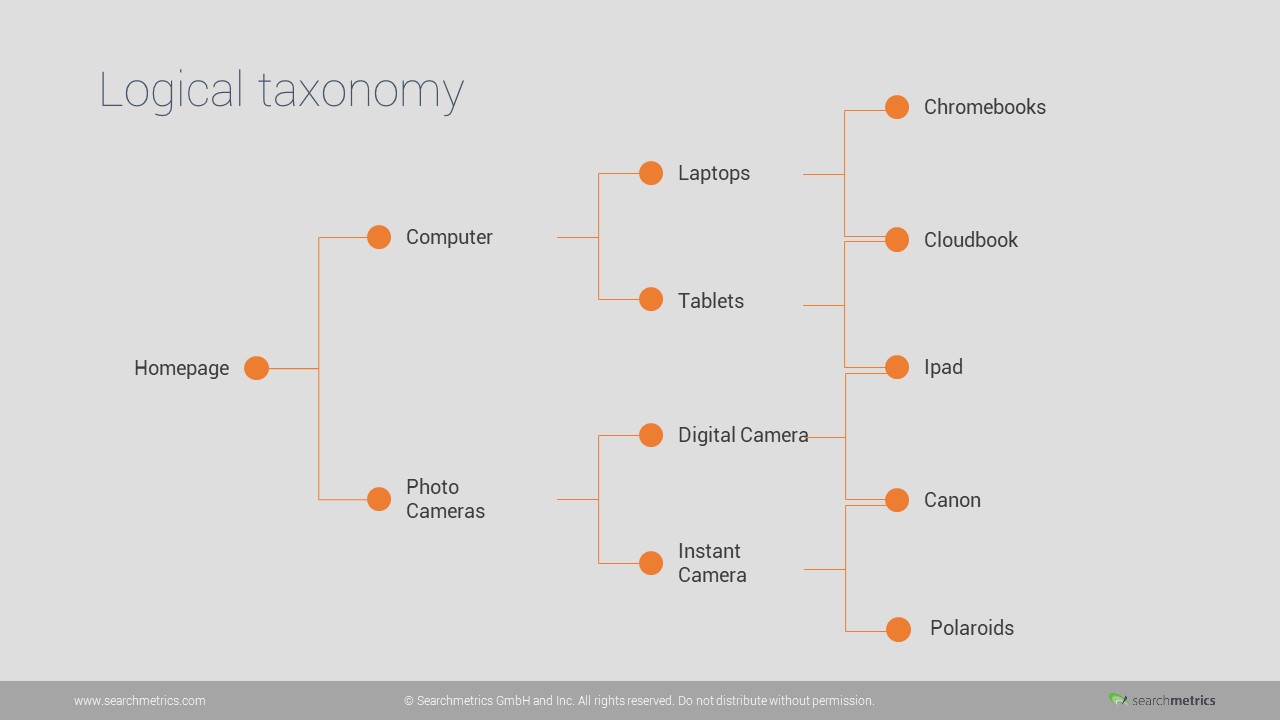
Think of your product categories in terms of a tree. The trunk would be a top category, while branches are categorized as subcategories. Place your product into the most general category that will apply, then start to filter down to more specific subcategories.

For example, if you're selling sports shoes, you would start with "Clothing, Shoes & Jewelry," then drill down through "Men's Fashion," and finally into "Athletic Shoes".

Optimize Subcategories for Relevance

Avoid the temptation to fill out every category that is remotely applicable to your product. Instead, concentrate on relevance. Only use categories your target audience would logically search for.

Amazon's research has shown that correctly categorized products exhibit a 25% better conversion rate than those miscategorized.

Utilize Keyword-Rich Attributes

Amazon provides attributes you could add to your product that help refine search results. These attributes, such as brand, size, colour, or material, must contain relevant keywords. This is very helpful for developing product taxonomy, as detailed attributes drive more focused searches.

Each product on Amazon has a unique pathway, and if that pathway is defined well, then your product reaches the destination-the buyer-more efficiently.

How Does Automation Play a Role in Amazon Product Taxonomy?

Any online store, for instance, with hundreds or thousands of SKUs, can take a lot of work to manage. But thanks to the advancement of technology today, automation tools can make online store taxonomy much easier. To date, using automation has really helped me create accurate and consistent product listings.

There are several ways through which automation will help out, namely:

  • Automated Category Mapping: These tools will automatically bring suggestions for appropriate categories per the product description, saving you much time and preventing human errors.
  • Bulk editing: Automation tools provide the option of making bulk category/attribute edits, which is very useful for large product catalog uploads.
  • Error detection: Automated systems flag mismatches in taxonomy - thus avoiding penalties from Amazon for incorrect product categorization.

I have seen firsthand how automation can reduce hours of manual work, reduce the risk of miscategorized products, and even make a huge difference in a large inventory.

A-Img2

Taxonomy Integration with SEO Strategy

While categorization is one thing, a solid Amazon category taxonomy also means optimization. This has everything to do with SEO strategies. While product taxonomy development relates to keyword research, there's further listings optimisation.

  • Include long-tail keywords: When developing your taxonomy, you should consider how users will search for products. Long-tail keywords, which are more specific and, in many cases, longer, will be important in your category names as well as attributes. For instance, "waterproof hiking boots" is a long-tail keyword that is much more specific than just "hiking boots."

Studies show that long-tail keywords account for 70% of all web searches and are necessary in any taxonomy strategy.

  • Optimize Metadata: Amazon categorizes products through titles, bullet points, and descriptions using metadata. Therefore, by aligning metadata to your category taxonomy and adding relevant keywords, your product's viewability will improve within Amazon search results and in other search engines, such as Google.
  • Keep Them Up to Date-Monitor and Adjust: SEO and taxonomy management is not set-it-and-forget-it. They need periodic monitoring of which categories and keywords work best, and adjustments can be made to your listings.

Implementing SEO into your taxonomy strategy has a double effect: it improves your Amazon visibility and also outside the Amazon domain in search engines.

Best Practices to Keep Your Taxonomy Current

Your product taxonomy on Amazon needs to be dynamic and nearly always changing, just like the market is. From my experience, only this can ensure the continuous success of the online store taxonomy. Here are a few best practices:

  • Regular Audits: Regularly audit your categories and subcategories to ensure you are properly categorized and optimized. Of course, you know how product trends keep changing around you, and so should your taxonomy.
  • Be Up to Date With Amazon's Policy Changes on Categories and Listings: Amazon always updates what it says about categories and product listings. The more updated information you have, the less prone to penalties you are and the more likely that your listings will be at their best.
  • Feedback Loop: Use customer review and Q&A sections to find out what people are searching for in your products. If they're using certain words or phrases, consider including those in your taxonomy so that you can identify the more relevant searches.

In my audits, I always see opportunities to recategorize based on shifts in customer behaviour, which has always led to significantly higher sales.

Frequently Asked Questions (FAQs)

What is Amazon category taxonomy?

Amazon category taxonomy is the hierarchical categorization of your products based on categories and subcategories. This greatly enhances your product's easy discoverability and also determines the level at which it will appear on that platform.

In what way does taxonomy enhance my product listing?

If your store's taxonomy is arranged in an orderly manner, those who need those products will eventually come across it, raising your chances of getting that sale.

Do I need to update my taxonomy over time?

Yes. You have to refresh it regularly because customer behavior and product trends change. By refreshing your taxonomy, you keep your listings up-to-date.

A-Img4

Key Takeaways

Summarizing what has been presented here on advanced techniques to manage Amazon category taxonomy, it's obvious that a well-refined taxonomy can spruce up your Amazon product listings. Three key takeaways:

  • Strategic Categorization: Start by expanding and constricting your categories to maximize the relevance and visibility of your products
  • Automation Tools: Leverage automation to make category management more accessible, reduce the chances of errors, and save hours when inventory is extended.
  • SEO Integration: Integrate your product taxonomy with SEO strategies to improve the presence of your Amazon products on search engines and other external ones.

We have covered the bare bones of Amazon product taxonomy, from strategic categorization to automation and SEO. Let me know how you manage your product taxonomy—just comment below or contact Amazon listing services on social media.

Remember to follow Amazon listing services on Facebook, Instagram, and LinkedIn for the latest ecommerce insights and strategies. Let's keep improving those listings together!

Amazon Store Taxonomy: Definition, Importance & Best Practices

Amazon Store Taxonomy
  • ebook1
  • ebook4
  • ebook7

When you sell on Amazon, you want your products to appear in the right category. It's essential for people to easily and quickly find your products. Amazon Store Taxonomy and Organization help ensure that your products appear under the right category or collection of products on the marketplace.

Moving forward in this blog, we will answer all your questions and concerns about Amazon store taxonomy. But first, let us find out what exactly Amazon Store Taxonomy & Organization is and how it applies to sites.

What is Amazon Store Taxonomy?

Amazon Store Taxonomy

To understand what Amazon store taxonomy is, we need to know the basic meaning of product taxonomy.

The word "taxonomy" has been used in libraries for a long time. But, in online retailing, product taxonomy or product categorization refers to a logical and hierarchical structure of products. It involves classifying and organizing your products in a way that helps facilitate logical and comfortable navigation of products. 

Amazon store taxonomy and organization have a similar definition. It refers to organizing, categorizing, and understanding why that is being done.

Imagine that the Amazon Store Taxonomy has 10,000+ categories, consisting of a vast catalog of products, including everything from furniture to digital goods. So, the Amazon store has hundreds of millions of SKUs.

So, you cannot simply throw your products in different categories and call them done. Instead, Amazon's product taxonomy demands a deep knowledge of your products and a logical way to list them on this eCommerce giant. 

Two main parts of Amazon store taxonomy are:

Amazon store taxonomy

Category Tree Or Product Hierarchy

Category tree groups your items by form and function in order categories. The tree is structured top-down, defining the relationship between different product groups at different levels.

Product Attributes Or Dimensions

Each product attribute has different values, and a single attribute applies to various categories. You can combine different attributes and use them as filters during product searching in the store. 

Put simply, categories define the product, and attributes describe the product

The goal of Amazon store taxonomy is to logically organize all available information so that shoppers can find the desired items in the least clicks. As a result, customers can move easily through the category tree by applying the right attribute filters. 

To present your products logically to customers, it’s important to understand the relationship between categories and product attributes.

Benefits or Importance of Amazon Store Taxonomy

Amazon Store Taxonomy

In a brick-and-mortar store, product taxonomy is fairly simple. For example, you find milk in the refrigerated section, body lotion in skincare, and granola on the cereal side. 

But this is more complex when it comes to eCommerce stores like Amazon. There are no aisles! That's when Amazon store taxonomy comes into the picture.

Here is how understanding Amazon store taxonomy can help your brand:

Better Search Performance

When you organize your products logically and correctly, there is a greater chance that your products are indexed in search results. In this case, Amazon’s search engine is more likely to display your products in response to keyword searches relevant to your offerings. 

The more your products appear in search results, the more traffic and sales you get to your brand. It's how your product taxonomy takes you one step closer to increased sales.

Reduced Bounce Rate

The bounce rate on Amazon refers to the total number of visitors who land on your product page but leave or bounce after visiting. Of course, there could be any reason for the high bounce rate, and incorrect and illogical taxonomy is one of the most common reasons. 

Buyers feel they need a more organized product catalog. When they can’t find the desired product fast enough, they leave the page right before you can make an impression with a well-written product listing. 

As a result, Amazon may dock your products with a low search ranking, making it challenging to gain expected traffic and sales.

Improve User Experience (UX)

Following the correct Amazon taxonomy strategy allows you to equip your products with relevant categories. As a result, shoppers can easily browse the product catalog and find exactly what they need. This results in enhanced UX and more credibility for your brand on Amazon. 

Using the right product categories, tags, and attributes allows correct products to appear in search results. So, you're helping people find exactly what they need with little to no friction. Amazon's product taxonomy also helps with upselling your products.

Best Practices for Amazon Store Taxonomy

There is no one-size-fits-all for fitting your products into Amazon store taxonomy. Instead, you must identify and categorize your target audience, industry, and search engines. 

Some best practices for Amazon category taxonomy are:

Understand Your Audience

In today’s highly competitive eCommerce world, customers are everything. You need to know who you’re selling to and what prompts them to buy your products on Amazon. 

Some proven ways to read your audience's mind include speaking to your customers, performing user experience tests, observing the audience's behavior in real time, and researching competitor trends. 

With this knowledge, you may drive expected traffic and profits.

Know Your Products

Another key to your eCommerce success is understanding the relationship between your customers and the products you're selling. For this, answering the following questions can help:

  • What specs of your products excite your customers?
  • How to communicate your products' unique selling points (USPs) in the vast Amazon taxonomy?
  • What language or search queries do customers use to locate products similar to your offerings? 

Amazon SEO Keywords

Amazon SEO Keywords

Did you know that Amazon is also a search engine? It’s the largest search engine in the eCommerce world, with 54 percent of product searches taking place on this giant. 

So, you've to think of the SEO (Search Engine Optimization) of your products on Amazon.

You need to insert high-volume keywords, tags, or phrases into your content, taxonomies, meta content, URLs, or rich product descriptions. Your product page will likely rank higher in search results and gain more visibility in the eCommerce store. 

It's called Amazon listing optimization to rank higher and boost your sales. When you hire a professional Amazon taxonomy service, you should get Amazon listing optimization as a part of the offerings.

Allow for Content Flexibility

You cannot set eCommerce taxonomy in stone. It's a continuous process that needs professional knowledge and experience. In addition, you may need to change your approach with changing trends or when there is a new product to launch. 

So, it’s best to implement the strategy in stages while testing and analyzing every outcome before the full-fledged implementation. 

Why Hire Professional Amazon Taxonomy & Mapping Services?

As mentioned above, accurate product taxonomy improves a website's usability and user experience. When people can easily find your products, you’re more likely to convert them and gain a sale. 

When you hire a professional service to do this, experts ensure the accurate placement of your products under the correct category and sub-category. As a result, shoppers can find your products easily and quickly, which brings you a good ROI.

Generally, you get the following Amazon product taxonomy services:

  • Product attribution definition
  • Localization of attribute data
  • Cleansing of attribute data
  • Customer preference-based categorization
  • Support for data modification
  • Data normalization & standardization 
  • Collection taxonomy definition
  • SEO-based categorization
  • And more!

VServe Amazon Listing Services offer depth domain expertise in Amazon store taxonomy. Combining our expertise and experience, we can help you achieve a competitive edge over other vendors. 

Wrapping Up

Setting up an Amazon store offers you a more significant number of sales and ROI. But you need to organize your store and product details in a way that is reliable for your customers and Amazon.

Therefore, appropriate product taxonomy is the key to enhancing the user experience and website usability. If you are looking for the best partner to organize your product taxonomy, then Amazon Listing Services offers the best solution for you. We ensure that your products are classified in the appropriate categories to improve your Amazon store sales and traffic.

Call Vserve for Amazon Store Taxonomy Service Today!

If you have questions about Amazon store taxonomy, don’t hesitate to contact us. Drop your comments down below and we’ll gladly help you!